
Last updated November 25, 2026
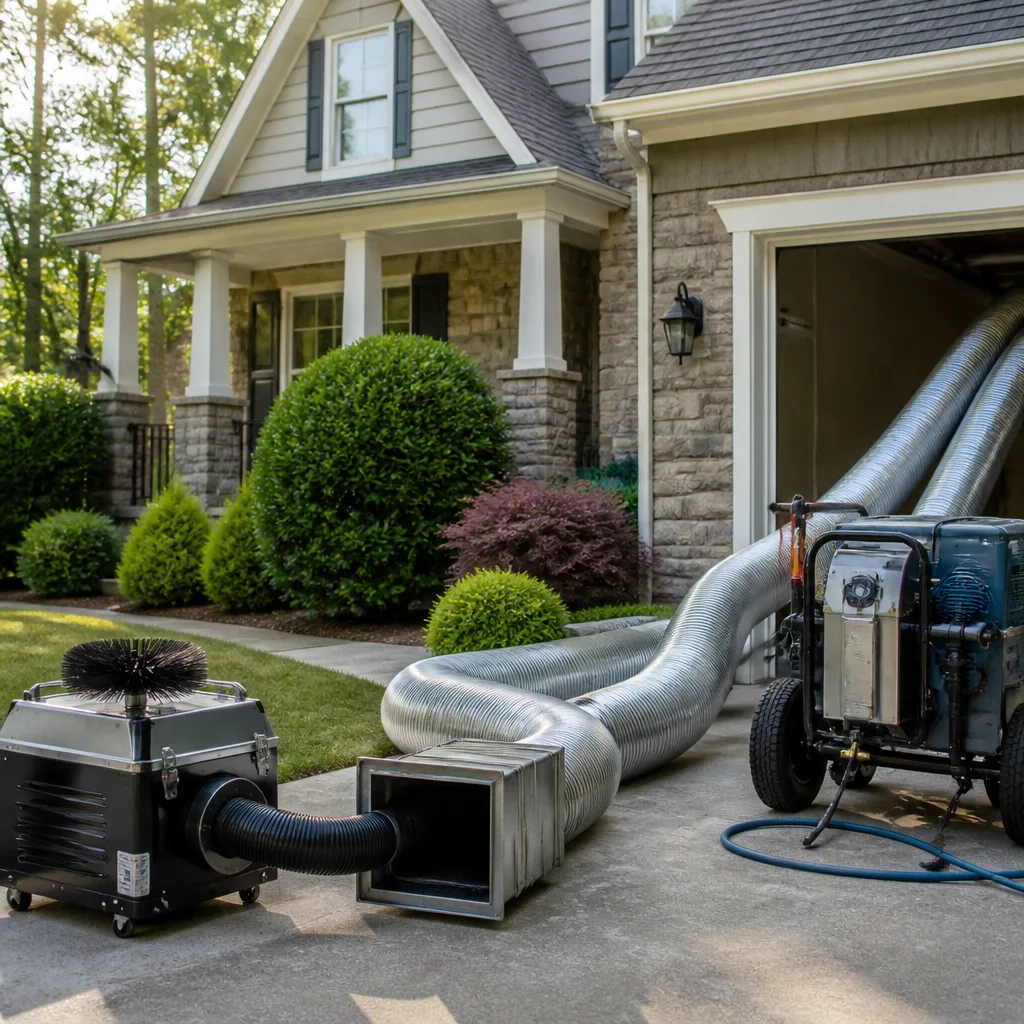 Whole-home duct cleaning
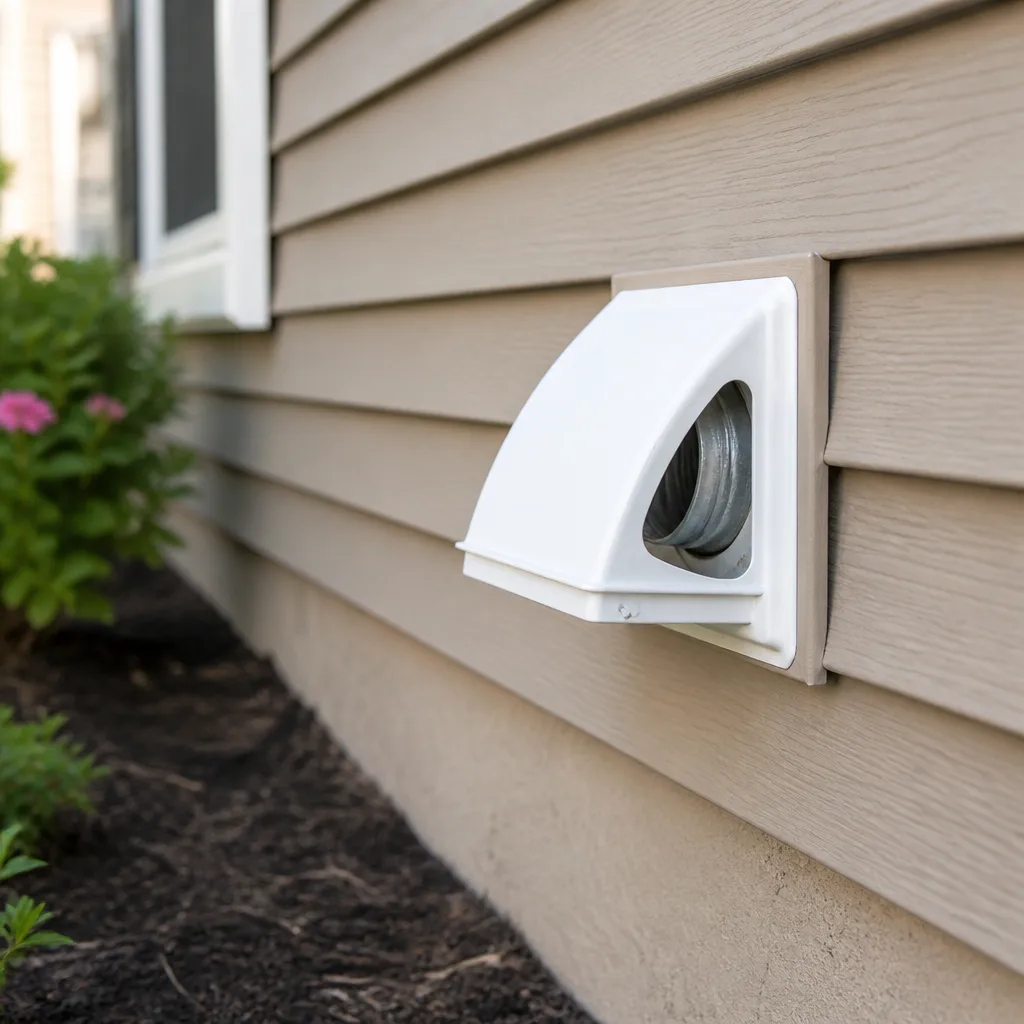 Dryer vent cleaning
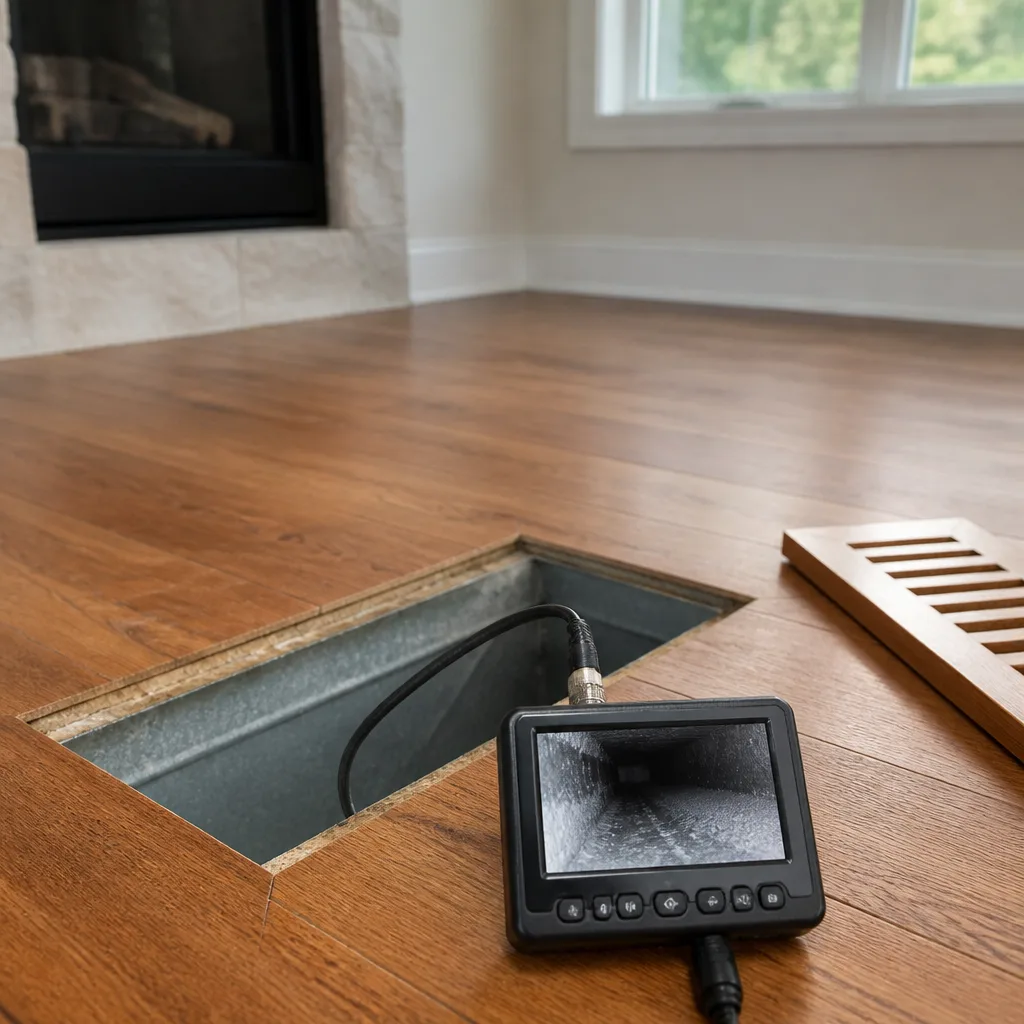 Camera inspection
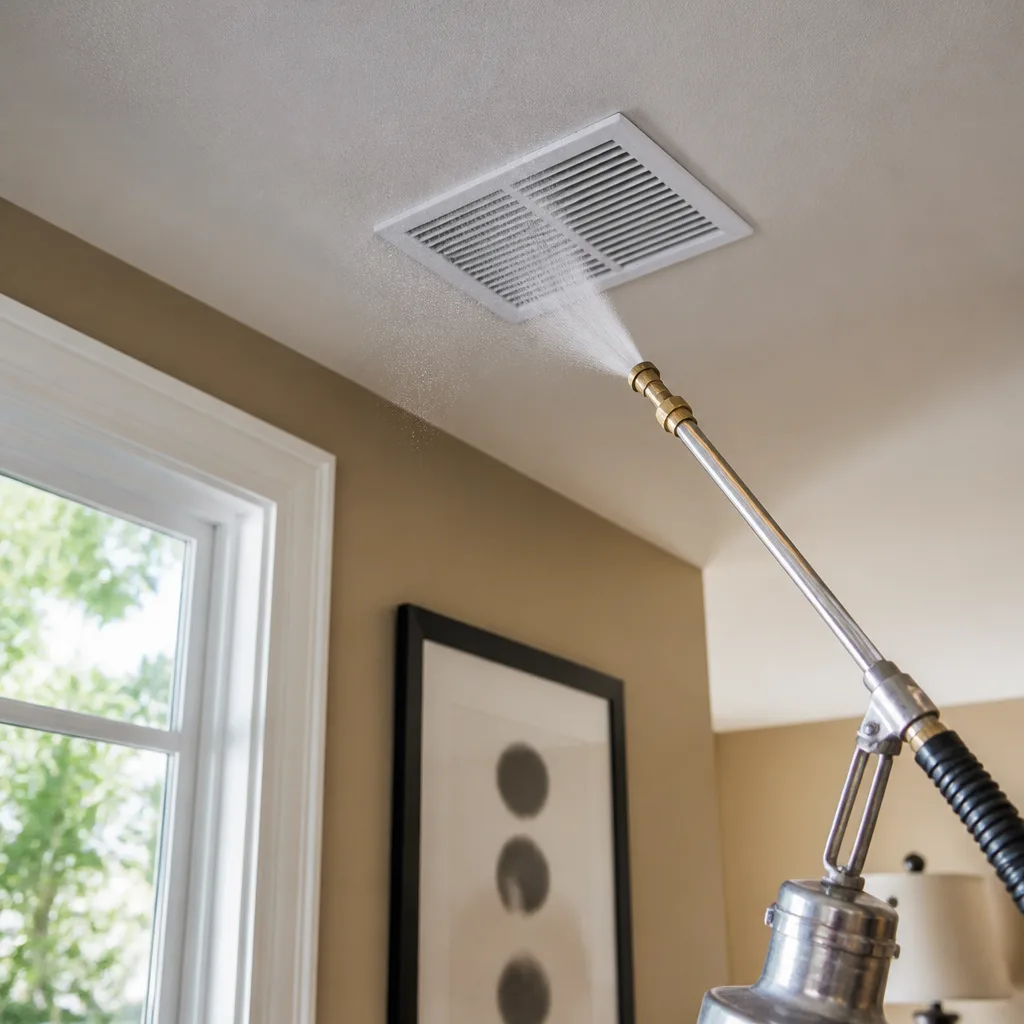 Sanitizing & deodorizing
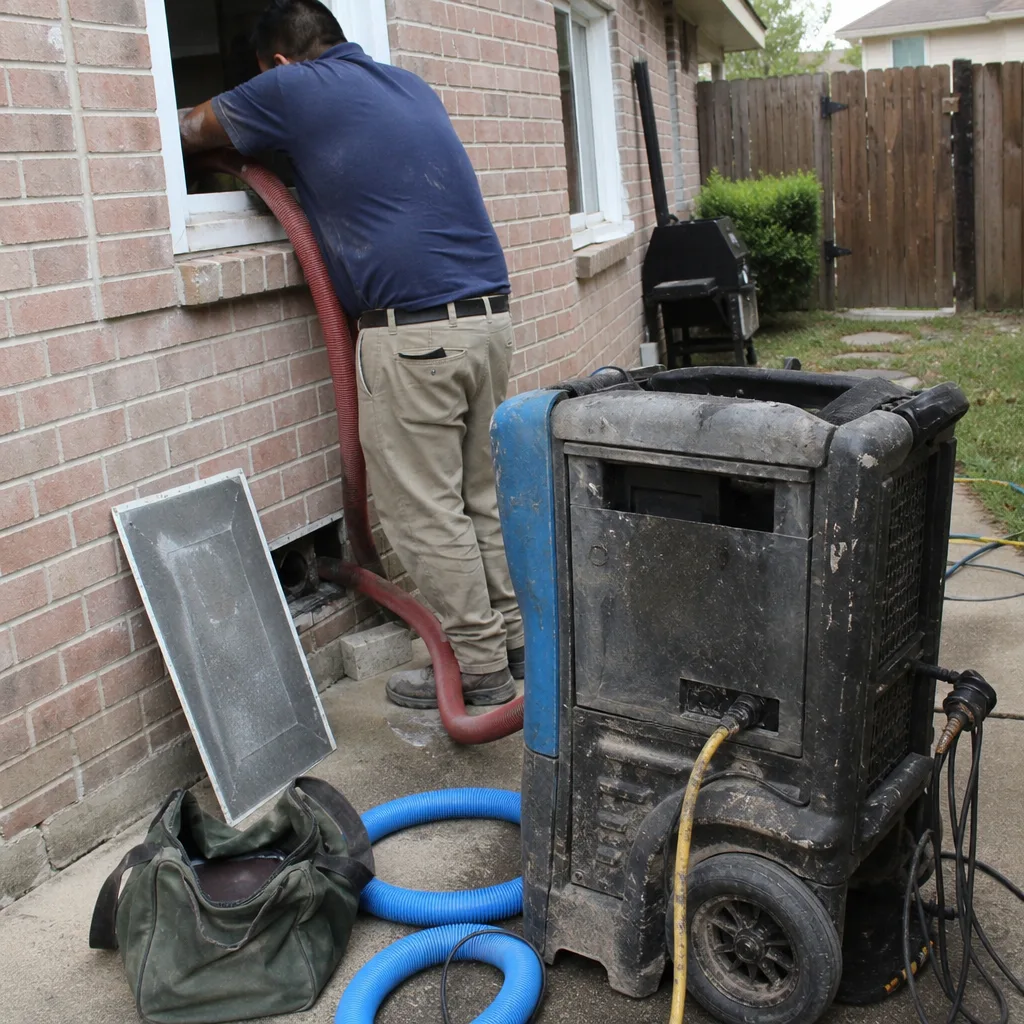
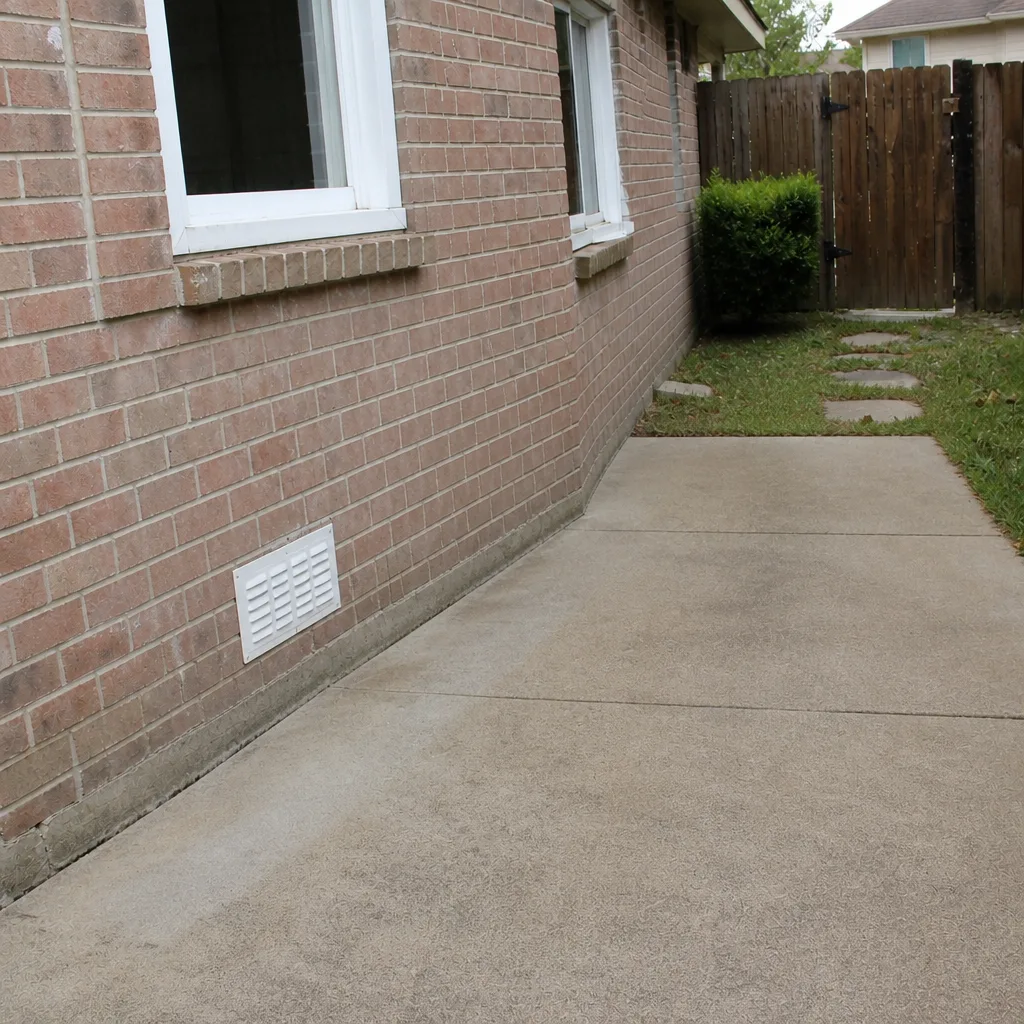
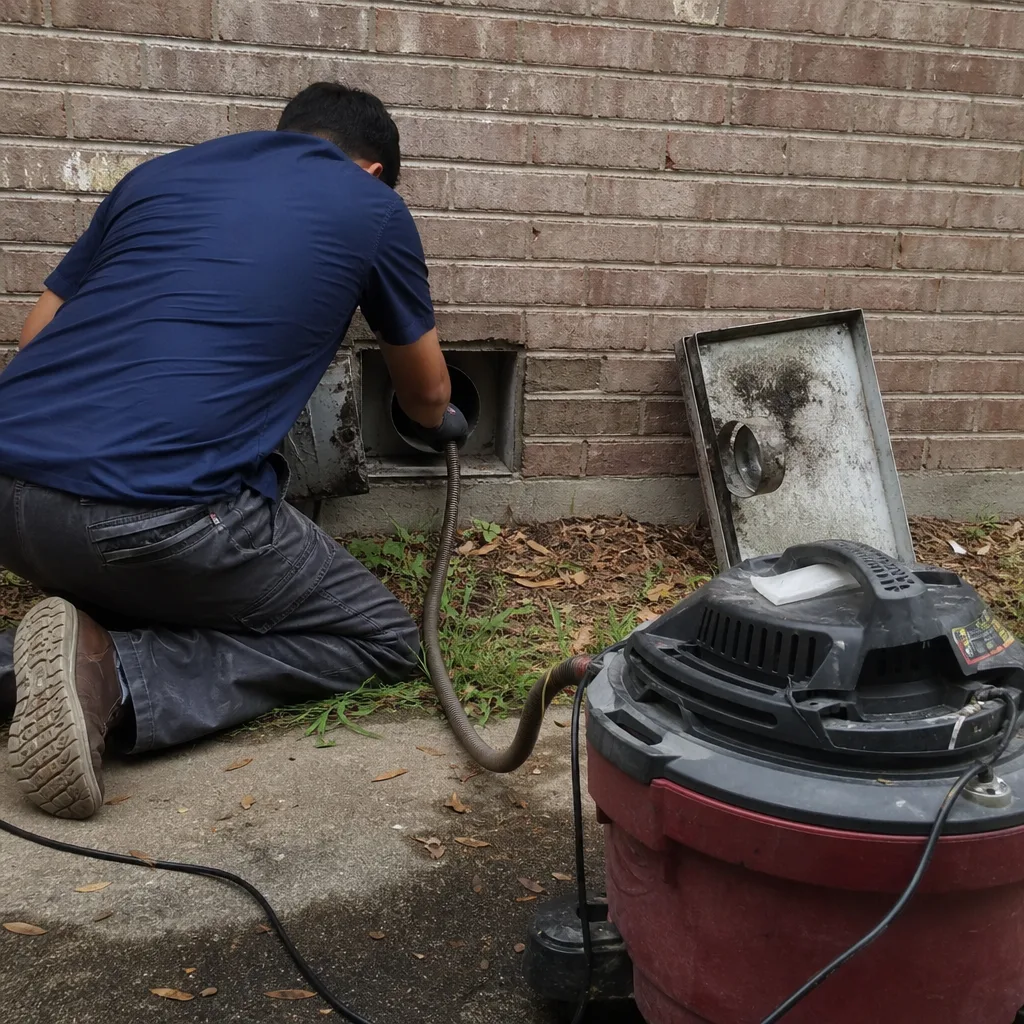
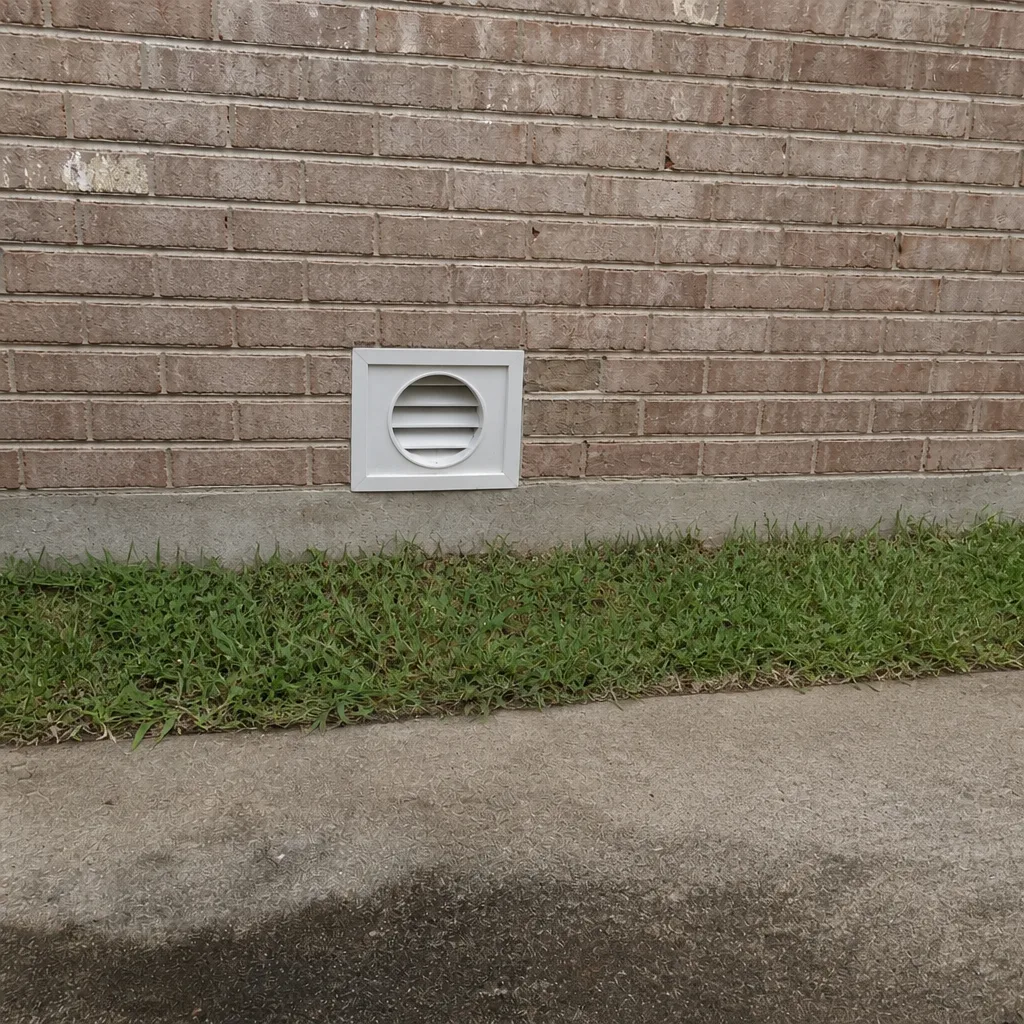
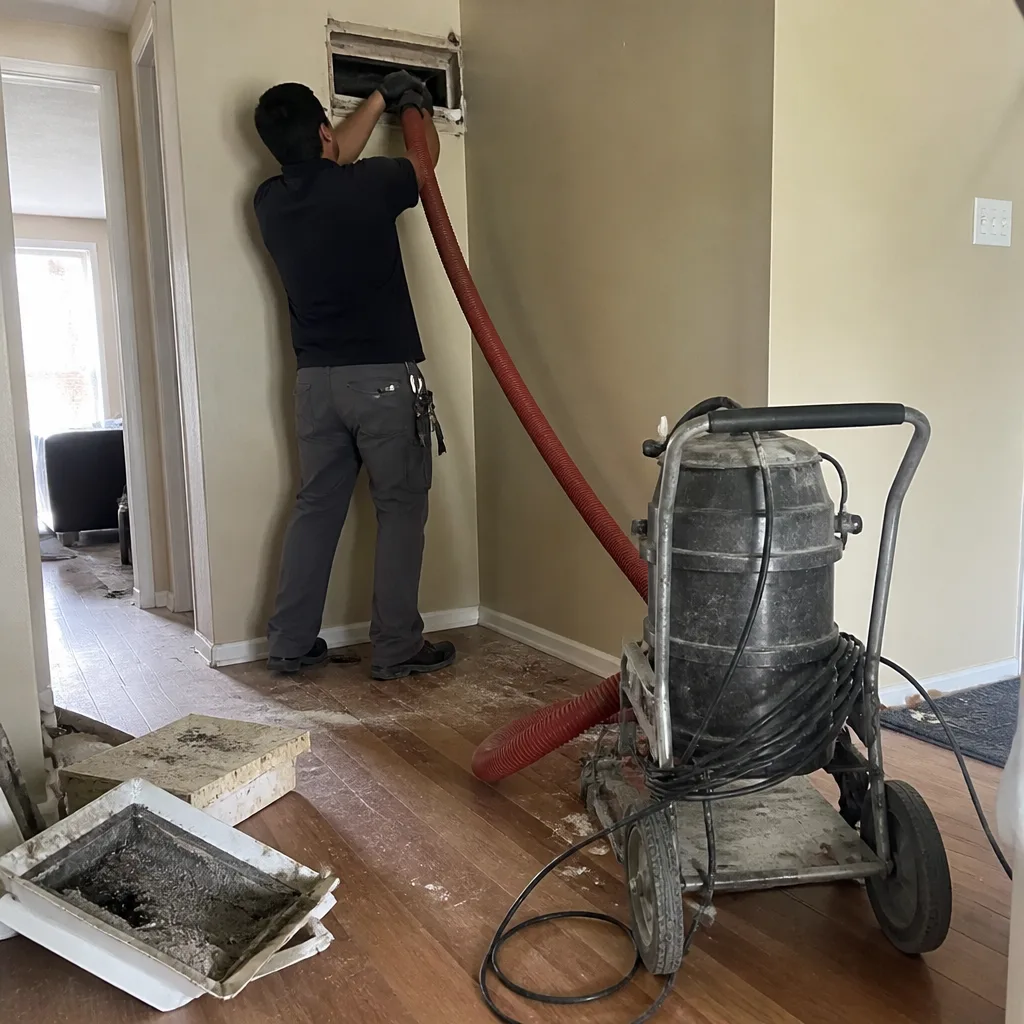
Whole-system duct and dryer vent check with before-and-after photos - you see exactly what came out of your vents
That "$99 whole-house special" is a bait ad - the real number appears once they are in your hallway, or the "clean" is a shop-vac at the register. We photograph the inside of your ducts before and after instead.
Choosing the Right Air Duct Cleaning Brand: A Buyer’s Guide for Alief
Most homeowners in Alief start their search for a duct cleaner by typing a familiar franchise name into Google. That instinct makes sense – a recognized logo feels safer than an unfamiliar local number. But a national brand does not guarantee a national standard, because franchisees run their own trucks, buy their own equipment and set their own process. Two vans with the same logo can carry completely different machines. What follows is a framework for judging a duct cleaning company on what actually determines the result: the grade of equipment that arrives, the containment and process behind it, and how much of the job the company documents before and after. You’ll learn how to read reviews that actually mean something, which credentials point to real standards, and why Alief’s housing stock and humid climate deserve a closer look than a logo.
Quick Answer
The right air duct cleaning brand in Alief is the one that can tell you, before booking, exactly what equipment it uses (a rotary-brush system and HEPA-rated vacuum, not a shop vac), how it contains debris during the job, what a written scope of work covers, and how it documents the results with before-and-after photos. Judge the process, not the name. A franchise logo tells you almost nothing about the machinery that will show up at your door.
Styles & brands we work with
- Whole-home duct cleaning
- Dryer vent cleaning
- Camera inspection
- Sanitizing & deodorizing
Table of Contents
- Why a National Brand Name Doesn’t Guarantee Equipment Standards
- Franchise Versus Local Specialist: What Each Model Means for You
- The Certifications and Equipment Specs That Actually Mean Something
- How to Read Reviews for Duct Cleaning (They’re Trickier Than You Think)
- Assessing Process Transparency: Scope, Specs and Documentation
- What Local Specialization Means in Alief’s Housing Stock and Climate
- The Questions to Ask Before You Book Anyone
- When a Duct Problem Needs Prompt Attention
Why a National Brand Name Doesn’t Guarantee Equipment Standards
Franchise systems sell consistency of branding. They do not always sell consistency of equipment, and in duct cleaning that gap matters more than in almost any other trade. A franchise agreement typically sets a name, a marketing package and a set of operating guidelines. The franchisee still decides which vacuum system to buy, whether to invest in containment gear, how much time to allot per home, and whether to document the work. Those decisions, not the logo, shape what happens inside your ductwork.
The practical result is wide variation under the same sign. Some franchise operators run proper truck-mounted or portable HEPA systems and treat each home as a full job. Others run a shop vac and a whip, allot an hour per house, and sell on price. From the customer’s side, the two experiences can look identical until the work is underway.
Here’s the counterintuitive part: a smaller local operation can out-invest a franchise on equipment, because it has one set of choices to make and its reputation lives or dies on a single market. Equipment grade is a buying decision, not a brand-size decision. When you ask what machine a company brings, you’re really asking how seriously it takes the category. In our view, the answer should sound specific: a rotary-brush agitation system, a HEPA-rated vacuum unit holding the debris, and negative-air containment keeping the work area clean. Anything vaguer than that is worth pressing on.
This is why we lead with equipment details on every quote and matched them to the tools we actually run: Air Duct Cleaning Alief works with Rotobrush rotary-brush systems and Nikro HEPA-rated vacuums, the same grade of gear used in commercial and industrial indoor air quality work rather than consumer equipment. A name on a van is easy. A specific machine is harder to fake.
Franchise Versus Local Specialist: What Each Model Means for You
Neither model is automatically better. What matters is which model gives you more accountability and a clearer equipment story. Here’s how to think it through.
What a national franchise usually offers
- Recognized branding and standardized marketing. You know the name before you call.
- Varying equipment investment by operator. Each franchisee buys their own machinery, so standards differ from one location to another.
- Training that follows the franchise system. Quality depends on how closely that operator follows it.
- Accountability split between franchise and local operator. Complaints can move slowly through a corporate layer.
What a local specialist usually offers
- Direct accountability. The person who quotes the job is close to the person who performs it.
- Clear equipment identity. A specialist lives on repeat and referral work in one area, so equipment quality is the business.
- Local knowledge. Familiarity with the housing stock, the mechanical code and the contamination patterns that come with local humidity.
- Depth over breadth. A good local operation covers the whole duct ecosystem rather than one narrow service.
The pattern to watch for in Alief is straightforward: a company’s model matters less than whether it can name what it brings and how the job is contained. A local specialist that invests in contractor-grade equipment and documents its work tends to outperform a franchise operator that coasts on branding. Ask both the same questions and compare the answers, not the logos.
The Certifications and Equipment Specs That Actually Mean Something
Certifications are shortcuts. They compress a lot of vetting into a mark you can check. But not every mark carries equal weight in duct cleaning, so it helps to know which ones point to genuine professional standards and which are essentially marketing badges.
The signals worth looking for:
- NADCA membership. The National Air Duct Cleaners Association sets an industry standard for how duct cleaning should be done. Membership signals a company that has aligned with that standard and accepts the source-of-truth assessment method for evaluating duct cleanliness.
- HEPA-certified or HEPA-rated collection equipment. HEPA filtration captures fine particles rather than blowing them back into the living space. A company that can specify its HEPA vacuum grade is a company that understands collection as a technical requirement, not a talking point.
- EPA-registered sanitizers. When a company offers sanitizing, the products should be EPA-registered for the intended use. Ask what’s applied and confirm it’s registered, especially if anyone in the home has allergies or respiratory sensitivity.
- Containment equipment. Negative-air machines and containment barriers keep dislodged debris out of your rooms during the job. A company that mentions containment without being asked is telling you it has done this properly many times.
- Documented process. A written scope of work, before-and-after photos, and a clear description of each step are the practical evidence behind any certification. The certification is the claim; the documentation is the proof.
We back our process with equipment from manufacturers who build for the trade: Rotobrush rotary-brush systems for agitation, Nikro HEPA-rated vacuums for collection, and Abatement Technologies negative-air and containment gear for keeping the work area controlled. When we extend beyond cleaning, we integrate Honeywell and Aprilaire products for filtration and humidity work. None of that is a substitute for a certification, but it’s the kind of specificity that lets a buyer verify rather than trust. Our technicians have up to 15 years of experience, and the equipment list reflects what that experience taught them to insist on.
How to Read Reviews for Duct Cleaning (They’re Trickier Than You Think)
Reviews are useful, but duct cleaning reviews are among the least reliable in the home services category. The reason is that most customers can’t see what happened inside their ductwork. They see a technician who arrived on time, was polite, and charged the quoted price. All of that is real and worth reviewing, but none of it tells you whether the ducts were actually cleaned properly. A five-star review for a fast, cheap visit can sit right next to a five-star review for a thorough, equipment-heavy job, and the two represent completely different outcomes.
What to look for instead:
- Reviews that mention the equipment. “They brought a big vacuum and showed me the brush system” is a stronger signal than “quick and easy.”
- Reviews that mention photos. A customer who saw before-and-after images of their own ducts is describing a verifiable process.
- Reviews that mention containment. Customers notice when a crew protects floors and furniture and keeps debris out of the room.
- Reviews that mention scope. “They walked me through what they’d do before starting” tells you the company documents its work.
- Patterns, not single scores. Read across dozens of reviews for repeated mentions of the same process details. Consistency is the tell.
- Healthy skepticism about price-only praise. A review that only says “cheapest around” tells you about the invoice, not the job.
In our experience, the reviews that matter most are the ones that describe the process in specifics. A buyer in Alief who reads a dozen reviews for process details will learn more than one who scans a star average. And when you can’t find those details in the reviews, ask the company directly. The best ones will happily tell you what they bring.
Assessing Process Transparency: Scope, Specs and Documentation
Transparency is easy to claim and hard to do. The companies that do it well tend to show it in the same three places, and you can check all three before you book.
The three tests:
- A written scope of work. Before the job starts, you should have a document or message listing every step: the number of registers and returns, the agitation method, the vacuum system, sanitizing if included, and any repair or sealing work. If the scope is verbal only, ask for it in writing.
- Published equipment specifications. A company serious about equipment grade will tell you the brands and the type of system (rotary-brush, HEPA vacuum, negative-air containment). Vague “professional equipment” language is a sign the specifics aren’t there.
- Before-and-after documentation. Photos of your own ducts before and after the job are the clearest proof the work happened. Ask whether documentation is included and what form it takes.
Add a fourth test if the job is more involved: ask whether the company can also repair and seal ducts, because gaps and loose joints undercut any cleaning. A cleaner who only cleans and leaves leaks behind is delivering half the result. Our own scope includes Duct Repair & Sealing and Air Quality & Sanitizing as separate services, so a job that starts as cleaning can be finished properly in the same visit rather than handed off to a second contractor.
Any company can talk about quality. The measure is whether it puts the steps, the specs, and the evidence in front of you before you decide. When a quote is transparent about all three, it’s usually the cheaper quote in the long run, because you’re not paying twice.
What Local Specialization Means in Alief’s Housing Stock and Climate
Alief sits in Harris County, in a humid subtropical climate where the air conditioning runs for most of the year. That combination shapes what duct cleaning actually involves here, and it’s a useful filter when you’re comparing companies that all claim to serve the area.
What local specialization looks like in practice:
- Familiarity with flex duct systems. Flex duct is common in this region’s housing stock, and it requires care: the right brush head and pressure, attention to sagging or crushed runs, and awareness of how flex duct can harbor moisture and dust. A company that treats flex duct like rigid metal can damage it or leave debris behind.
- Harris County mechanical code awareness. Ductwork and dryer vent work are covered by mechanical code requirements. A local company should be able to tell you when a repair or vent change needs a permit and how it handles that.
- Humid subtropical contamination patterns. High humidity promotes microbial growth in ducts and on coils, which is why sanitizing and moisture control often matter as much as cleaning here. The goal is removing the conditions that let growth return, not just the visible dust.
- Dryer vent fire risk. Lint accumulation in dryer vents is a real fire hazard anywhere, and it’s a category that duct-only cleaners often skip. We include dryer vent work in the same visit, which is a code-compliance and safety credential many cleaners lack.
- Aging HVAC systems. Older systems with original ductwork often need repair and sealing alongside cleaning, and a local specialist should be able to assess that on the same visit.
- Renovation dust. After a remodel or major repair, construction dust settles into return and supply runs. Post-renovation cleaning is a common reason Alief homeowners call.
None of this is exotic. But it is local, in the sense that a company working in Alief every week has seen the same systems and the same problems repeatedly. That familiarity is a genuine advantage over a franchise operator covering a wide territory with a standardized script. If you want a closer look at how we handle the core service, our air duct cleaning page walks through the process step by step.
The Questions to Ask Before You Book Anyone
The fastest way to separate a serious operation from a cheap one is a short list of questions. Ask every company the same set and compare the answers. The companies that answer clearly and specifically are usually the ones that will do the job properly.
Ask these ten:
- What equipment will you bring? You’re listening for rotary-brush agitation plus a HEPA-rated vacuum, and containment gear if the debris load is heavy.
- Do you use negative-air containment? This keeps debris out of your living space during the job. A yes here is a strong professionalism signal.
- Is the quote per system or per vent? Per-vent pricing encourages shortcuts. A per-system quote reflects the whole job.
- What exactly does the scope cover? Registers, returns, main trunk, sanitizing, repairs. Get it in writing.
- Will you document the work with before-and-after photos? Ask to see how it’s done.
- What sanitizing products do you use, and are they EPA-registered? Especially relevant if allergies are a concern.
- Can you repair and seal ducts if you find gaps? A cleaner-only operation will hand you back to the phone book.
- Do you also clean dryer vents? Fire safety and code compliance in one visit.
- Are you familiar with flex duct systems and Harris County mechanical requirements? Local expertise shows in the answer.
- Can I see a sample scope of work and photo set before I decide? A company confident in its process will share without hesitation.
We’ve seen how much clearer these questions make the decision. The comparison that matters isn’t between two names; it’s between two answers. Ask, listen, and the right choice tends to make itself obvious.
When a Duct Problem Needs Prompt Attention
Most duct cleaning is a scheduled job. You plan it, it happens, you go about your week. But a few situations call for prompt attention, and it’s worth knowing which ones so you don’t wait on a problem that’s getting worse.
Call promptly if:
- A dryer vent is taking much longer to dry a load than it used to, or the dryer gets unusually hot. Lint buildup is a fire risk and shouldn’t wait.
- You notice visible dust blowing from registers after a renovation, or a musty smell that returns as soon as the system runs.
- Anyone in the home is dealing with allergy or respiratory symptoms that seem tied to the HVAC system.
- There’s visible mold or moisture near a register or on a coil.
- You hear rattling or whistling that suggests a duct joint has come loose.
For all of these, a prompt booking beats a delayed one. We answer 24/7, and fast dispatch runs 7am to 7pm, Sunday through Friday. Call (877) 492-3978 for a free estimate. We don’t promise a same-minute arrival, but a call outside dispatch hours is booked into the next opening.
Common Mistakes to Avoid
- Judging by the logo alone. A national franchise name tells you nothing about the equipment the local operator will bring. Ask about machines.
- Choosing purely on the lowest quote. Duct cleaning is a labor and equipment job. A quote far below the rest often reflects a shop vac and a short visit, not a thorough clean.
- Accepting per-vent pricing. Per-vent quotes encourage a fast pass rather than a full job. Insist on a per-system scope.
- Skipping the containment question. Without negative-air containment, debris you can’t see might end up on your furniture. Ask how the work area is protected.
- Ignoring flex duct care. Alief’s housing stock has plenty of flex duct, and the wrong brush and pressure can damage it. Ask whether the company knows how to handle it.
- Not asking about dryer vents. A duct-only cleaner leaves a fire-safety gap most homeowners don’t think about. Bundle the two when you book.
- Waiting for problems to compound. Small gaps and loose joints get worse with time, and a repair-and-seal visit costs less than a full replacement down the line.
See the difference
 Before
 After
 Before
 After
 Before
 After
When to Call a Professional
Duct cleaning is not a job for a shop vac and a weekend. The equipment required to agitate, capture, contain and document a professional clean is substantial, and the risks of doing it wrong include redistributing debris through the home, damaging flex duct, and missing safety issues in a dryer vent. Call a professional if you’re planning a cleaning after a renovation, if you’ve noticed a musty smell or visible dust from registers, if anyone in the home has allergy concerns, or if a dryer vent is underperforming. If you’re near an aging HVAC system or you’re not sure whether your ducts are flex or rigid, a professional assessment is the fastest route to a clear answer. Air Duct Cleaning Alief offers free estimates in Alief – call (877) 492-3978.
Frequently Asked Questions
Trust the process details over the brand name. Ask what equipment the company brings (rotary-brush and HEPA-rated vacuum are the baseline), whether it uses negative-air containment, whether it provides a written scope and before-and-after photos, and whether it can repair and seal ducts if needed. A company that answers all four specifically is the safer choice, regardless of logo. Call (877) 492-3978 for a free estimate and see how we answer those questions ourselves.
No. Franchisees operate independently, so equipment, training and documentation vary from operator to operator under the same name. A local specialist that invests in contractor-grade equipment and documents its work can match or exceed a franchise standard. The reliable test is to ask both companies the same equipment and process questions and compare the answers.
It means a rotary-brush system to agitate debris loose, a HEPA-rated vacuum to capture it without releasing fine particles back into the air, and negative-air containment to keep the work area controlled during the job. Consumer shop vacs fail on the collection and containment fronts, which is why the equipment list matters more than the marketing claim. We can describe our equipment in exactly those terms on any quote.
They’re useful but incomplete. Most homeowners can’t see what happened inside their ducts, so they review on punctuality and price. Read for mentions of equipment, containment, before-and-after photos and a written scope instead of star averages. Repeated process details across many reviews are the strongest signal of actual job quality.
They should be familiar with flex duct systems common in the area, Harris County mechanical code requirements for ductwork and dryer vents, and the way humid subtropical air promotes microbial growth in ducts and coils. They should also know that dryer vent cleaning is a fire-safety and code-compliance concern. If a company talks about local conditions in specifics rather than generalities, it has actually worked here.
There’s no single rule that fits every home. Homes with pets, recent renovations, allergy concerns, or visible dust from registers usually benefit from more frequent cleaning, while a well-maintained system with clean filters may go longer. A professional inspection is the honest way to decide. Call (877) 492-3978 – estimates are free, and we’ll tell you what your system actually needs.
The Bottom Line
Choosing the right air duct cleaning brand in Alief comes down to equipment, process and proof. A national franchise name is not a guarantee of any of those, because franchisees choose their own machinery and standards. Judge every company on the same four questions: what equipment it brings, how it contains debris, what its written scope covers, and how it documents the result with photos. Add certifications you can check (NADCA membership, EPA-registered sanitizers, HEPA-rated collection) and local knowledge of flex duct and Harris County code, and you have a framework that works no matter whose logo is on the van. The best brand is the one that answers specifically. That’s the standard we hold ourselves to, and it’s the one worth demanding from anyone.
Air Duct Cleaning Alief covers the full picture: Air Duct Cleaning, dryer vent cleaning, HVAC cleaning, Air Quality & Sanitizing, and Duct Repair & Sealing. We arrive with Rotobrush, Nikro and Abatement Technologies equipment and we document the work. If you’re ready to compare answers rather than names, call (877) 492-3978. We answer 24/7. Fast dispatch from 7am to 7pm, Sunday through Friday.
Written by the team at Air Duct Cleaning Alief.