
Last updated November 25, 2026
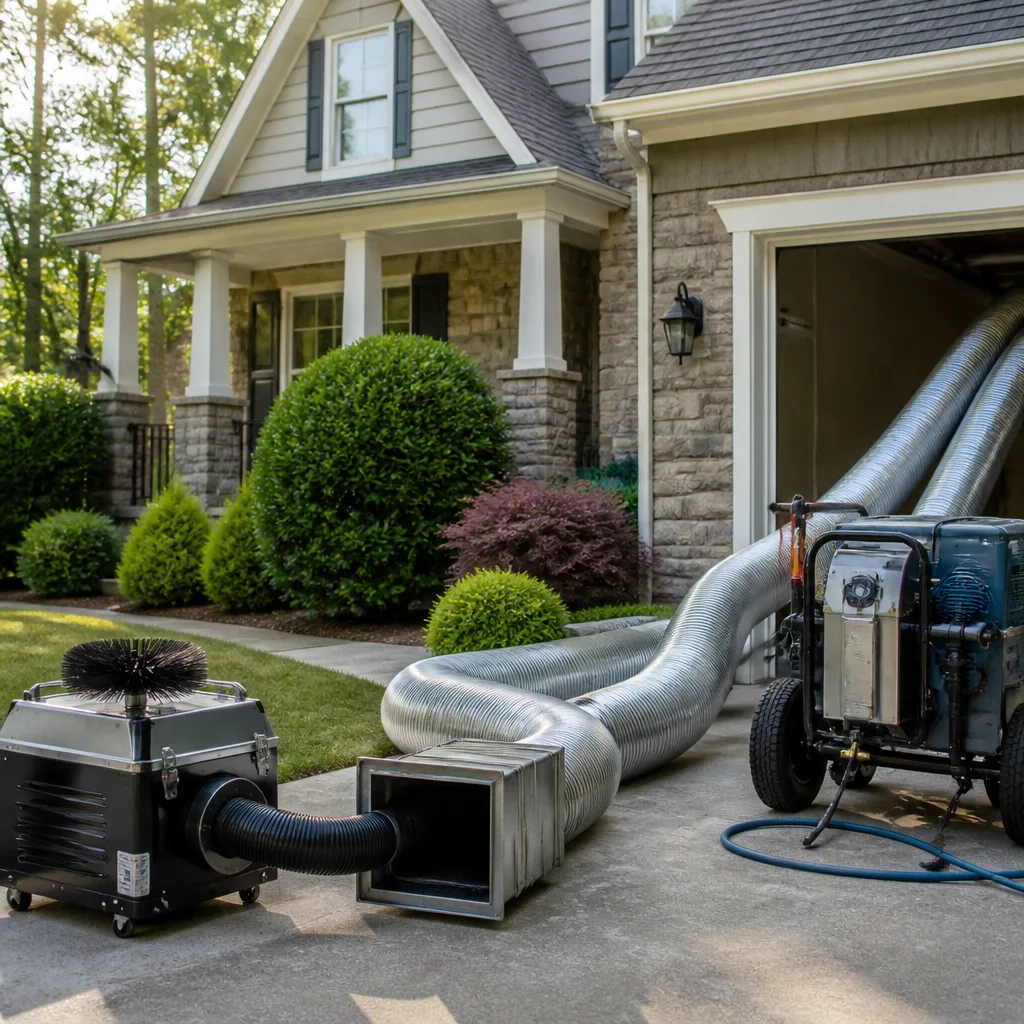 Whole-home duct cleaning
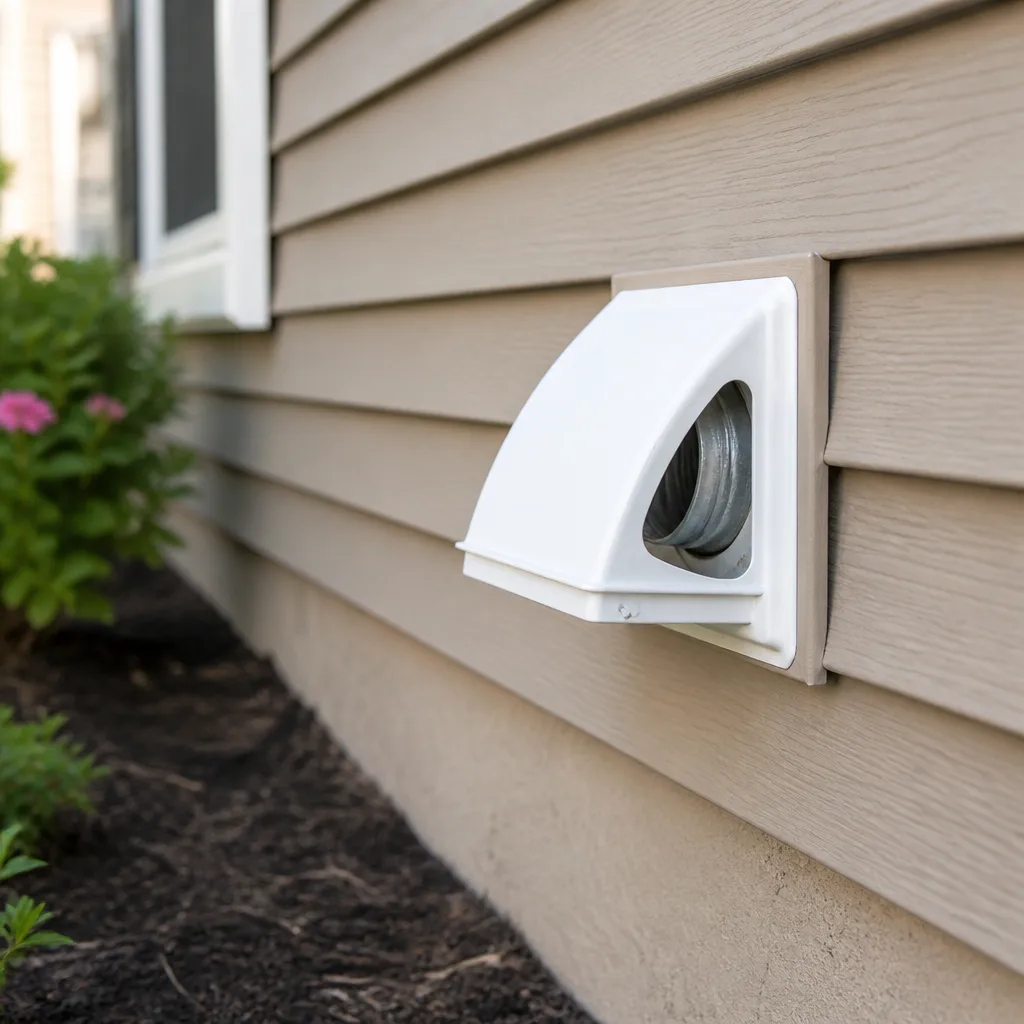 Dryer vent cleaning
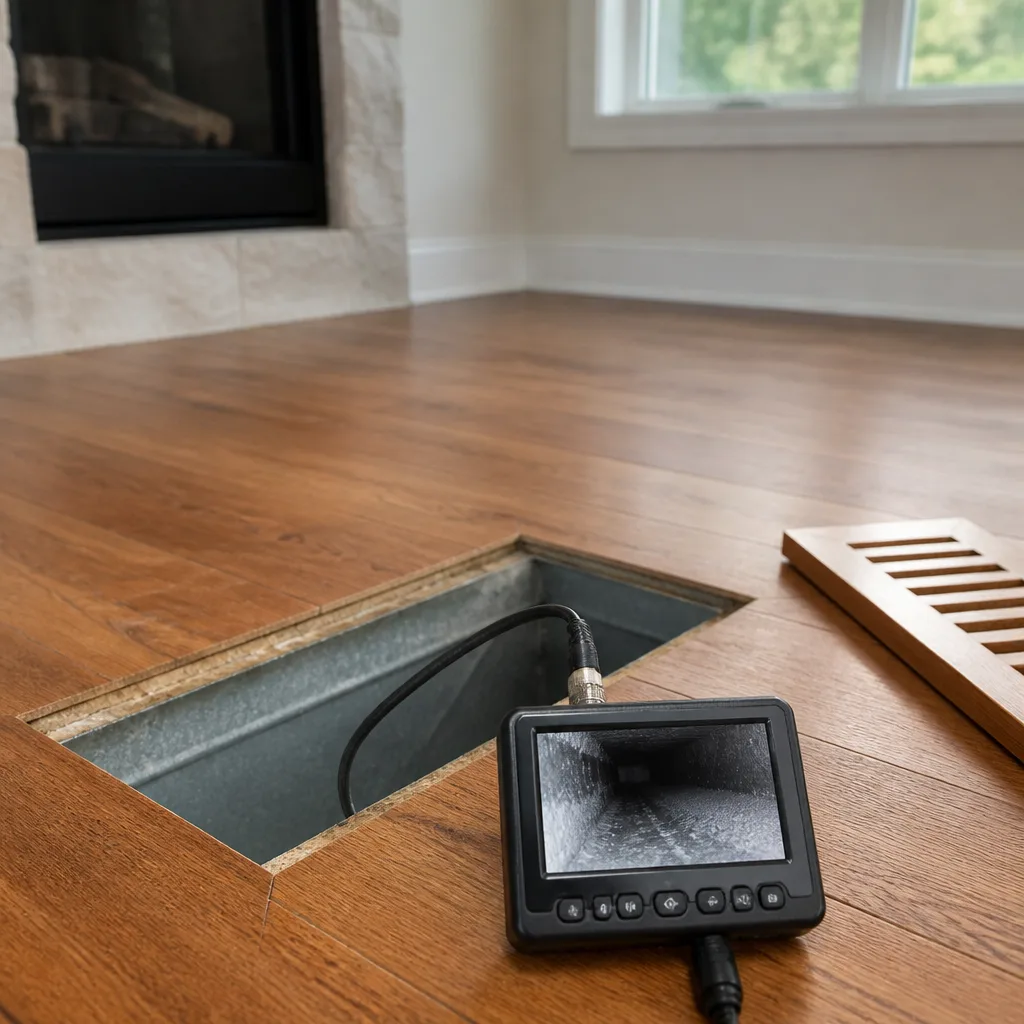 Camera inspection
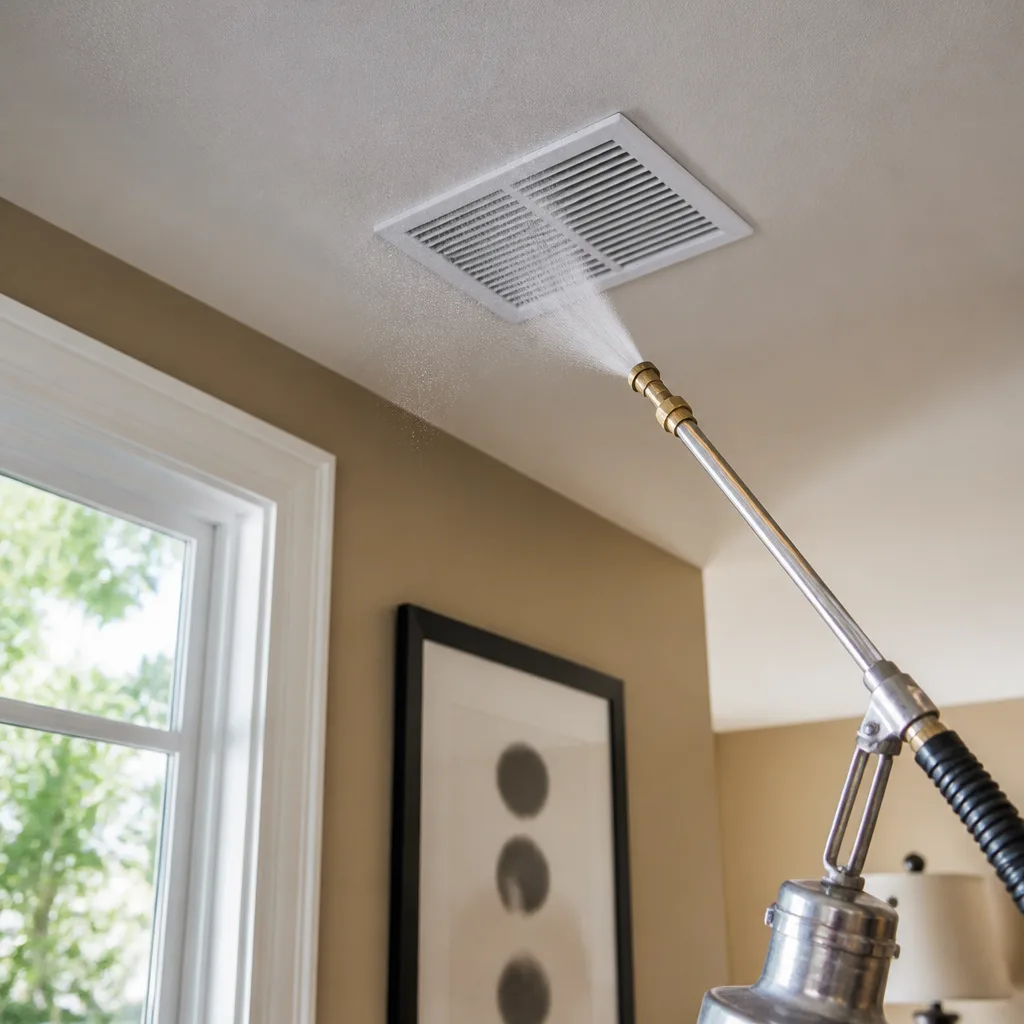 Sanitizing & deodorizing
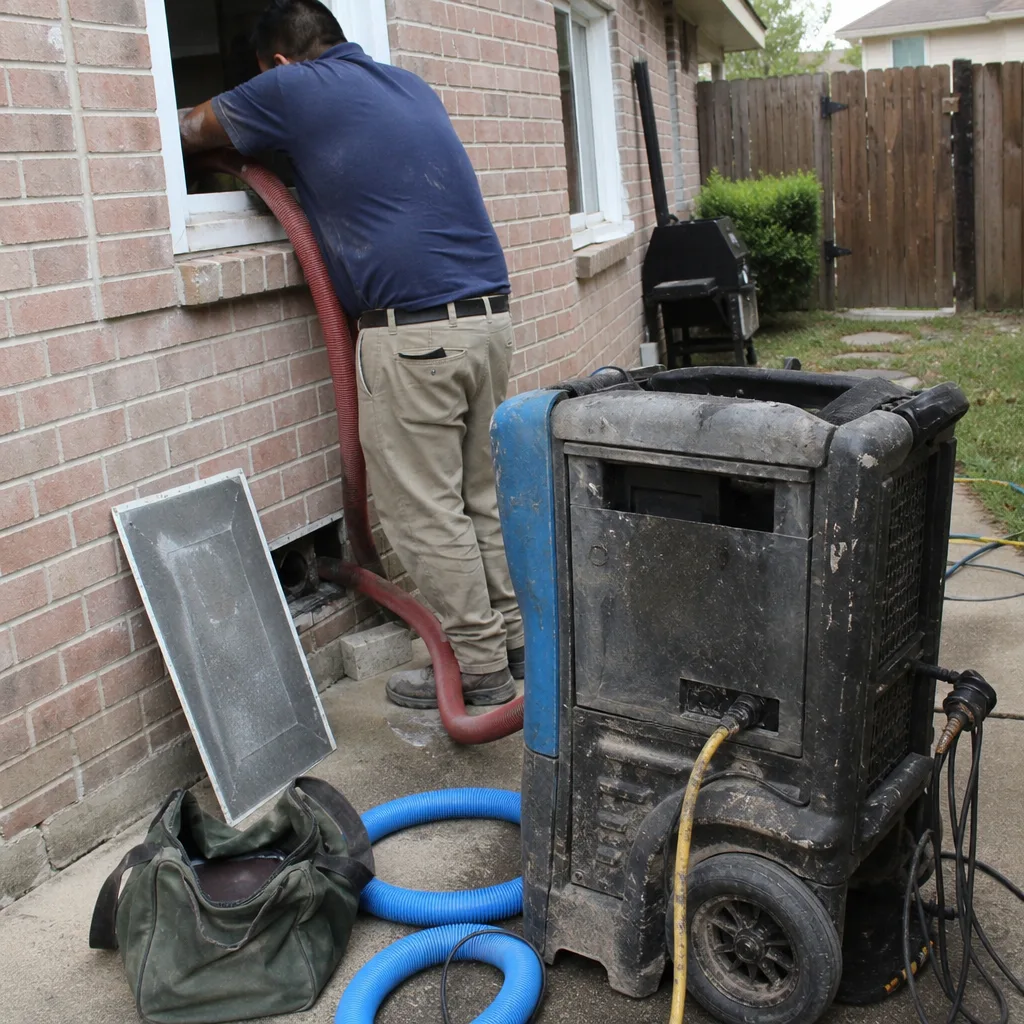
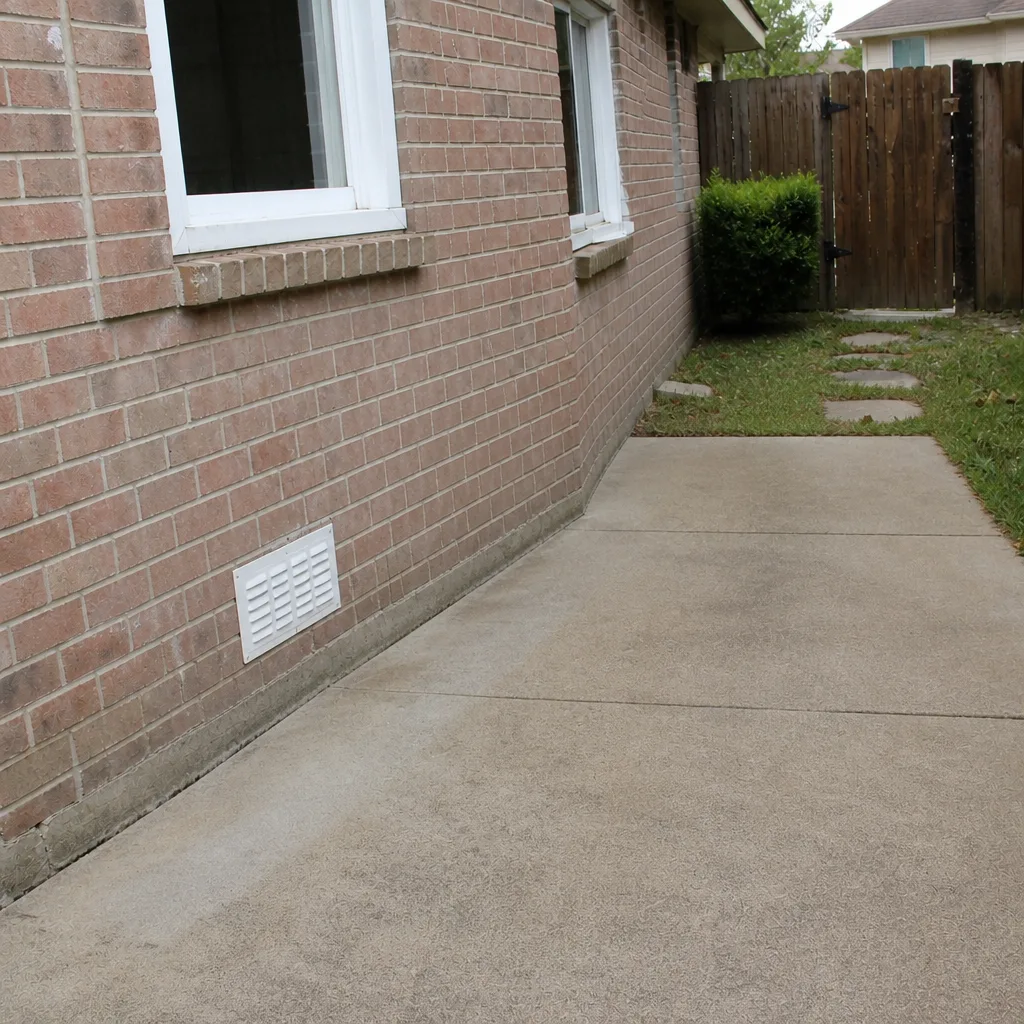
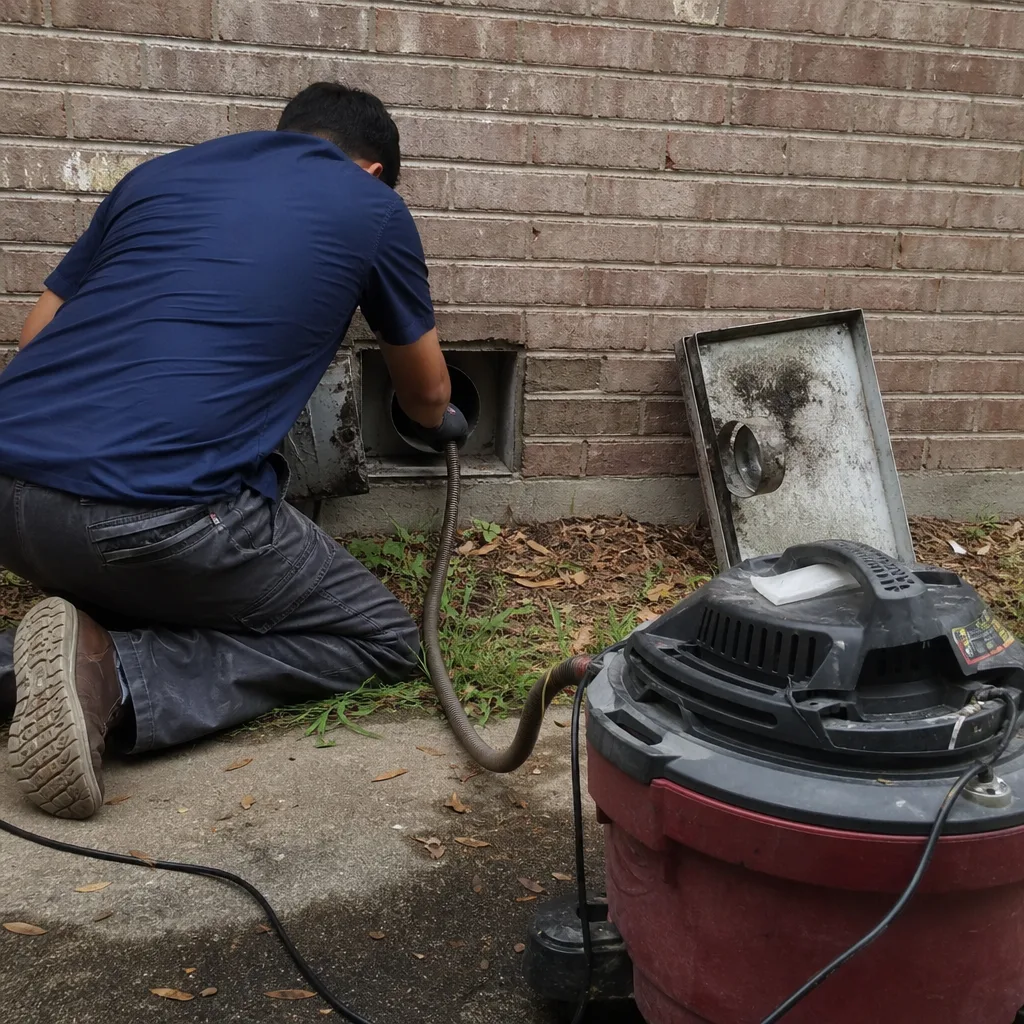
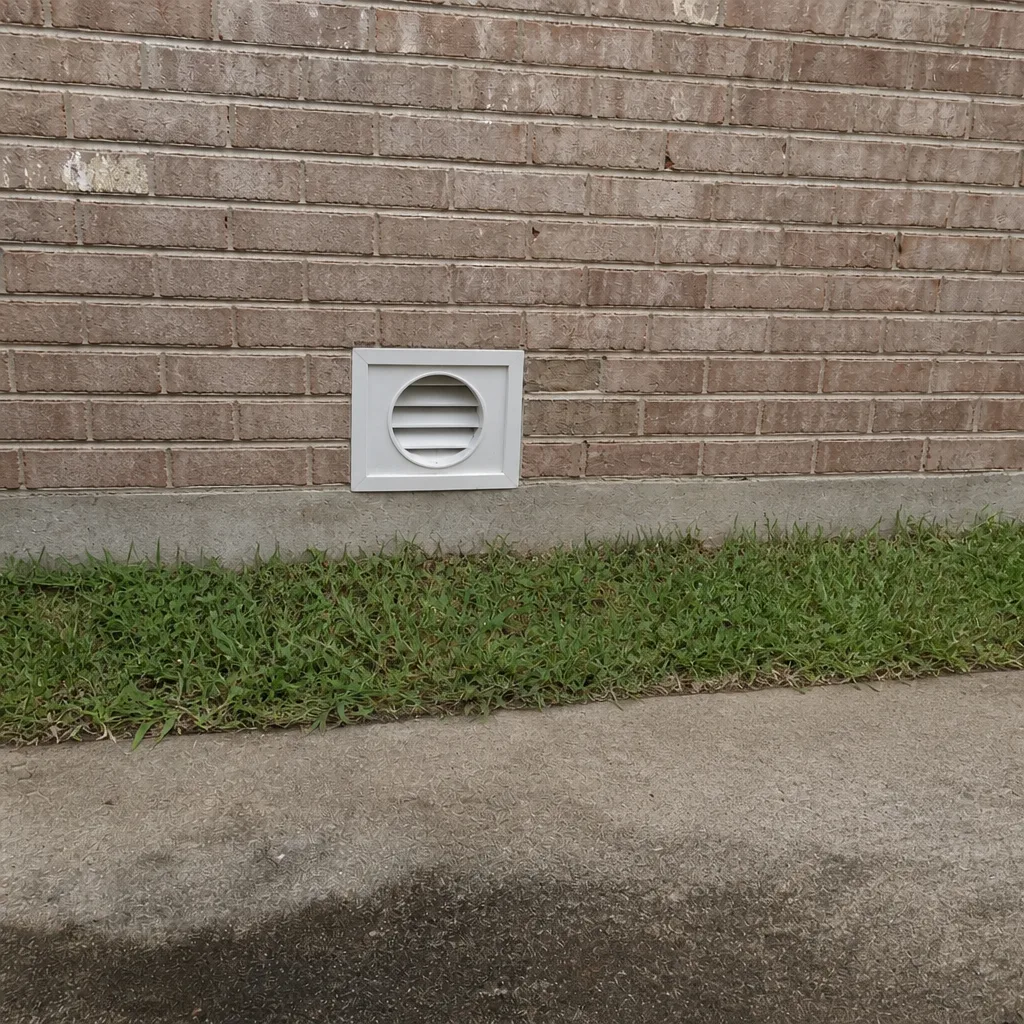
Whole-system duct and dryer vent check with before-and-after photos - you see exactly what came out of your vents
That "$99 whole-house special" is a bait ad - the real number appears once they are in your hallway, or the "clean" is a shop-vac at the register. We photograph the inside of your ducts before and after instead.
The Complete Guide to Air Duct Cleaning in Alief
Ask a homeowner what happened during their last duct cleaning and you’ll usually get a shrug. Something with a hose. A bit of noise. A bill at the end. That fog is exactly what lets a low teaser price turn into a much larger invoice once the equipment is set up in the driveway. When nobody can describe the steps, nobody can tell the difference between a real job and a quick pass with a shop vac.
This guide closes that gap. We’ll walk through what a contractor-grade cleaning actually involves in Alief, why the neighborhood’s humid air and post-1980s housing stock create a contamination pattern that drier Texas markets don’t see, and how to read the paperwork a credible company should leave behind. By the end you’ll know what to ask before you book, so the price on the estimate is the price you pay.
Quick Answer
Air duct cleaning in Alief is a whole-system process: a technician cuts access points, agitates every supply and return run with a rotary brush, captures the debris with a HEPA-rated vacuum under negative pressure, sanitizes where microbial growth is present, and seals any gaps found with mastic or foil tape. In Alief’s high-humidity corridor, that full process matters more than in drier parts of Texas because moisture speeds up biofilm growth inside flexible duct. A one-pass vacuum job doesn’t fix that. We repair and seal, not just clean.
Styles & brands we work with
- Whole-home duct cleaning
- Dryer vent cleaning
- Camera inspection
- Sanitizing & deodorizing
Table of Contents
- Why Alief Ducts Need a Different Approach
- What Actually Happens During a Professional Cleaning
- Negative-Pressure HEPA vs. Consumer Vacuums
- The Full Duct Ecosystem: What Gets Cleaned
- Post-1985 Homes with Original Flex Duct: Highest Priority
- How to Read a Job Completion Report
- What Air Duct Cleaning Costs
- Common Mistakes to Avoid
- When to Call a Professional
- Frequently Asked Questions
- The Bottom Line
Why Alief Ducts Need a Different Approach
The air inside your home is only as clean as the ducts delivering it. Three factors stack up in Alief to make household ductwork age faster and dirt worse than in most of Texas. You can’t change any of them, but you can plan around them.
Humidity is the first factor. Southeast Texas keeps a long stretch of warm, humid months, and an air-conditioned home runs its system constantly through that stretch. Condensation forms on the cold surfaces of the coil and, over time, on damp patches inside duct runs. Any dust that settles on those patches becomes a food source for mold and bacteria. That film – biofilm – builds up slowly and doesn’t come off with a vacuum pass. It has to be scrubbed off the surface and then treated with a sanitizer.
Soil and construction are the second. Alief sits on the clay-heavy soils that characterize the Houston area, and that soil is fine and dusty near grade. Homes built in the 1980s and later, which covers much of the Alief housing stock, were often built with flexible duct rather than rigid metal. Flex duct has ridges and inner surfaces that catch dust the way a screen captures lint. Those corrugated walls trap more material than a smooth metal duct does.
Density is the third. Alief’s residential blocks are packed closely, and when a neighbor renovates, that dust finds its way through windows and doors and returns. A recent remodel in a home is a strong prompt to get the ducts inspected and cleaned, because drywall dust migrates quickly through the return side and settles where nobody looks.
Put those three together and the case for cleaning in Alief is not about a house being neglected. It’s about a climate and a housing stock that put more biological load and more fine particulate into the same duct run than you’d see in a dry market. So the answer to “does it need cleaning” is almost always “yes, and the process has to be thorough enough to handle biofilm, not just dust.”
What Actually Happens During a Professional Cleaning
A proper air duct cleaning job is a sequence, not a single pass. The order matters because each step makes the next one work. Here’s how a typical job goes, from the moment equipment comes in to the final walk-through.
- Walk-through and system map. The technician identifies every supply run, every return, the air handler location, and the blower compartment access. He counts registers so nothing gets skipped. Ask to see this map before work starts.
- Containment setup. Negative-air equipment and plastic sheeting are placed to isolate the work zone. Abatement Technologies negative-air gear is designed to keep the work area under light vacuum so dislodged debris stays in the duct, not in your kitchen. This is one step untrained crews skip entirely.
- Access creation. The tech cuts small, deliberate openings into plenum and trunk at strategic points, then re-covers them with mastic or tape at the end. The openings are the only way a brush reaches the far end of a run.
- Agitation and negative-pressure capture. A rotary brush – like those on a Rotobrush system – travels down each duct, scrubbing the walls. At the same time a HEPA-rated vacuum pulls the loosened debris into a sealed collection canister. Agitation without capture just blows the dust back into the room; capture without agitation leaves the stuck-on film behind. You need both at once.
- Air handler, blower, and drain pan. The blower wheel, coil face, and drain pan get cleaned and checked. A wet drain pan is a microbial nursery, and it has to be cleaned, not just wiped.
- Sanitizing. Where growth is present, a Guardsman-grade surface treatment is applied to the inner duct. Not every job needs sanitizing; jobs with visible growth or a musty smell almost always do. See Air Duct Cleaning Alief for the standard treatment scope.
- Seal and close-up. Gaps, loose joints, and torn flex sections are repaired and sealed. This is the step that makes the cleaned ducts actually deliver air where it’s supposed to go.
- Final walk-through and pressure test. The technician runs the system and checks airflow at registers, confirms containment was maintained, and leaves you a written report with photos.
That’s the full arc. Every step has a purpose, and every step has a way to verify it was done. If a crew shows up and starts vacuuming without a walk-through and without cutting access, the job you’re paying for hasn’t happened.
Negative-Pressure HEPA vs. Consumer Vacuums
This is the section most homeowners have never had explained, and it’s the one that separates contractor-grade work from a service-grade pass.
Consumer vacuums and lightweight shop vacs pull a modest volume of air. Their filters are designed for pickup around the house, not for ductwork runs thirty or forty feet long. When those vacuums encounter a duct system, two things happen. First, the vacuum can’t pull enough air to create meaningful negative pressure inside the trunk line, so dislodged dust gets redistributed into the living space. Second, the filter can’t hold fine particulate, so the smallest, most inhalable particles end up back in the room. That’s the “cleaning” that leaves a haze in the air for a day.
Contractor-grade equipment is designed around airflow. A Nikro or comparable HEPA-rated vacuum is engineered to move hundreds of cubic feet per minute (CFM) through sealed ductwork while capturing particles at high efficiency. On a real duct run, the CFM number matters because it dictates whether the machine can keep up with the rotary brush. A brush spinning at full speed in a duct moves a lot of material fast. If the vacuum behind it can’t keep pace, the agitation just rearranges the dirt.
Here’s the practical takeaway. When you ask a company what equipment they use, listen for the words “HEPA-rated” and “rotary brush” together. If they answer “shop vac” or can’t name their equipment, the job isn’t going to be thorough no matter how long they stay.
- Agitation: rotary brush, driven by the equipment (Rotobrush-style), not a hand brush on a stick.
- Capture: HEPA-rated vacuum, sealed to the duct, not an open hose nozzle.
- Containment: negative-air setup with sheeting at the work zone, not windows open.
- Filtration upgrade: Honeywell and Aprilaire media filters and humidity controls can be added during the same visit when appropriate.
- Sanitizing: Guardsman-grade surface protocol where growth is present.
Four of those five steps show up on the invoice and in the photos. Ask to see them.
The Full Duct Ecosystem: What Gets Cleaned
The most common bait in low-price duct cleaning is a scope limited to the registers – the grilles you can see from the hallway. The registers are the smallest part of the system. A full job cleans every component that air passes through, from the return grille all the way to the supply boot.
- Supply runs. Every branch duct from the plenum to the register boot. Every one, not just the ones near the air handler.
- Return runs. The return system pulls air from rooms back to the handler. It’s usually dirtier than the supply side because it sees less filtration. Returns are where a lot of debris accumulates and where a lazy job skips first.
- Trunk lines and plenum. The main distribution lines. These often have the most built-up material because they carry the combined flow from all branches.
- Air handler box. The cabinet that houses the blower and coil. Interior surfaces collect dust and sometimes microbial growth.
- Blower compartment. The blower wheel is a fan of small blades that collects dust quickly. A dirty blower wheel reduces airflow to the whole house.
- Drain pan. Often overlooked. If the pan holds standing water, it needs cleaning and the drain line needs checking, or the whole house smells musty.
- Registers and grilles. Removed and cleaned as part of the job, not just wiped in place.
If a company’s written scope mentions only “ducts” without naming the return, the air handler, or the drain pan, ask them to spell out exactly what’s covered. In our experience, that’s the moment a low bid starts to grow. See HVAC cleaning for how the equipment-side work overlaps with the ductwork.
Post-1985 Homes with Original Flex Duct: Highest Priority
Alief’s housing stock is heavily weighted toward homes built in the 1980s and 1990s, and a great many of those still have their original flexible duct in the attic and walls. Flex duct is a smart product and not a bad choice. But it ages in predictable ways, and those ways matter for cleaning.
First, flex duct has a corrugated inner liner. The ridges catch dust the way the inside of a dryer vent catches lint. That accumulated layer is thicker than what you’d see inside a smooth metal trunk, and it holds moisture longer, which is exactly the condition that feeds biofilm in Alief’s humid months. A flex run that’s been in place for decades often has a dust film that’s baked on.
Second, flex duct can sag, kink, or tear. A kink restricts airflow, and a tear lets attic air and insulation into the airstream. Neither condition is visible from the register. The only way to find either is during a cleaning, when the technician has eyes on the run.
Third, some older flex has a non-metallic liner that can dry out and flake over time, which means small particles can enter the airstream as the system runs. A cleaning and inspection will reveal this. If a run is compromised, it needs repair or replacement rather than a vacuum pass, which is why we treat duct repair and sealing as part of the same service rather than a separate call.
If your home is in that post-1985 band and you’ve never had the ducts inspected in your ownership, this is the highest-priority category. A single visit can clean, inspect, and repair in the same trip. That’s a lot more efficient than finding out about a torn run months later when the AC is running badly.
How to Read a Job Completion Report
A credible contractor leaves documentation behind. The report is your proof that the work happened, and it’s the thing you’ll want if you ever sell the house or need to show an insurer what was done. Here’s what to look for on it.
- System map with numbered runs. Every supply and return run is listed and checked off. If the report just says “ducts cleaned,” the report isn’t showing you much.
- Before-and-after photos. Photos of the interior of the duct at each access point, plus the air handler and drain pan. Photos taken from a phone are standard in the trade. Compare the “after” to the “before” for the same spot.
- Equipment listed. Rotobrush rotary-brush system, HEPA-rated vacuum make and model, negative-air containment. If the report doesn’t name equipment, it isn’t documenting a process.
- Sanitizing details. The product used and which runs were treated. If sanitizing was included, the report should say so.
- Repairs performed. Which joints were sealed, which runs were repaired, which were flagged for replacement. This is where the value of the visit shows up over the next decade.
- Findings and recommendations. A short list of anything the tech observed that needs attention – a wet drain pan, a kinked flex run, a filter that’s undersized for the return. Honest contractors list these even when they’re not selling anything that trip.
Before the tech leaves, ask to look at the report with him. The walk-through is the moment to ask questions. If there’s a finding you don’t understand, say so. A good contractor will explain it without pressure. See air duct cleaning for the standard reporting scope we leave behind.
What Air Duct Cleaning Costs
Air duct cleaning is priced per system, by estimate, and the price on the written estimate is the price you pay – not a per-vent price that changes once the technician is in the driveway. The right way to think about it: one flat price for the whole system, agreed before any equipment comes in. Any company that prices per vent or that quotes a price before seeing the system is a company that’s going to add items later.
Here’s what the quoted price should cover at a minimum, and what to expect in the estimate line items:
- Whole-system cleaning – every supply and return run, trunk lines, and air handler cabinet, not a register count.
- Agitation + HEPA capture – the rotary brush and the HEPA-rated vacuum together, not one without the other.
- Negative-air containment – protection of the living space during the work.
- Air handler, blower compartment, and drain pan cleaning.
- Sanitizing (when needed) – a Guardsman-grade surface treatment applied to inner duct where growth is present.
- Duct repair and sealing – where gaps, kinks, or tears are found.
Every job gets a written estimate before work starts. That estimate is free, and it lists each item and its price. The company should not add per-vent pricing, dispatch fees, or surprise add-ons.
If a company offers you a very low headline price and a written estimate is only produced after they’ve set up, the number is going to move. The honest way is the estimate first, then the work.
Dryer vent cleaning is a separate, smaller job and worth bundling with the duct cleaning when you can. It’s the same crew and the same visit, and it’s the safety service most duct-only cleaners don’t handle. See dryer vent cleaning for that scope.
Common Mistakes to Avoid
- Booking without a written scope. If the company can’t put on paper what’s included, it’s not going to include much. A real estimate names the returns, air handler, blower, and drain pan. Two sentences of scope tells you what you’re actually buying.
- Choosing based on the lowest advertised number. A low teaser price on a truck’s side is not a quote. It’s a number designed to get a truck out to your house, where the real price will appear after setup. Prices should be set per job by the written estimate, not by a sticker.
- Skipping the air handler and drain pan. Cleaning the ducts without cleaning the blower and pan leaves the source of the musty smell in place. In Alief’s humid climate, a wet drain pan is often the actual problem behind a “smelly AC” complaint.
- Ignoring flex duct condition. Cleaning a kinked or torn flex run without repairing it cleans air that’s leaking into the attic. Address the condition during the visit or you’ll be paying again later.
- Assuming “cleaned” means “sealed.” Gaps and loose joints that were cleaned are still gaps and loose joints. Sealing is not optional; it’s the step that makes the cleaning last.
- Not asking for before-and-after photos. Photos of the interior of your own ducts are the one piece of evidence a company can’t fabricate. If they won’t show you the before, they aren’t showing you the work.
- Falling for allergy claims with no service behind them. “Breathe easier” alone is marketing. The real answer is a specific process: rotary agitation, HEPA capture, sanitizing, and sealing. Ask which ones are in the price.
When to Call a Professional
You don’t need to be sure there’s a problem to call. A free estimate is the answer to “does this need cleaning” and “how much will it cost.” Still, a few situations make a call urgent rather than routine.
Call if you’ve had a renovation, a water leak, or a pest problem – drywall dust and moisture get into the return side fast, and a duct cleaning afterward is far cheaper than letting the residue settle in the blower. Call if anyone in the home has persistent allergies, sinus trouble, or asthma symptoms that are worse indoors. Call if the house smells musty when the AC runs, or if you can see dust plumes coming out of a register. Call if you’ve never had the ducts cleaned in a post-1985 home with original flex duct, because you don’t know what’s in the attic runs. Call if you’ve heard a lint trap smell or noticed the dryer taking too long to dry a load, which usually means a lint-clogged dryer vent rather than a duct problem.
Air Duct Cleaning Alief offers free estimates in Alief – call (877) 492-3978. We answer 24/7. Fast dispatch from 7am to 7pm, Sunday through Friday.
Frequently Asked Questions
Every three to five years is a sensible baseline, and more often if the home has pets, recent renovations, or allergy-sensitive occupants. Alief’s humidity means biofilm growth moves faster than in dry markets, so the upper end of that range is realistic for homes with original flex duct. If you’re unsure, book the estimate and let the inspection answer the question. Call (877) 492-3978 for a free estimate.
It’s worth it when the process is real and the home matches the conditions that need it – post-1985 builds with original flex duct, allergy symptoms, recent renovations, or a musty smell. It’s a sales pitch when the job is a quick vacuum pass with no access points, no containment, and no report. The difference is measurable: aggressive agitation, HEPA capture, sanitizing, and sealing. A free written estimate tells you which type you’re being offered.
A whole-system residential job with the full process typically takes most of a working day, and longer for larger homes or if repairs and sealing are needed. Access creation, agitation, capture, and the air handler work alone take hours; the reporting and walk-through add to that. Schedule the day rather than a two-hour window. Call (877) 492-3978 to book the estimate.
Cleaning reduces the particulate load the system is circulating – dust, pollen, and microbial debris – which is often a factor in indoor allergy symptoms. It won’t solve an unfiltered or undersized HVAC system on its own, which is why we recommend Honeywell or Aprilaire media filtration during the same visit when appropriate. For a full discussion of what the system can and can’t do, call (877) 492-3978 for a free estimate.
Yes. Dryer vent cleaning is one of our five core services, and it’s the same crew and the same visit when booked with duct cleaning. A clogged dryer vent is a fire-safety concern and a code-compliance point, and it’s the service most duct-only cleaners don’t offer. Call (877) 492-3978 to book both together.
We serve the Alief area and surrounding neighborhoods. Because we’re connecting you with a vetted local professional, call (877) 492-3978 to confirm the specific address is covered and to schedule the free estimate. We answer 24/7. Fast dispatch from 7am to 7pm, Sunday through Friday.
The Bottom Line
Air duct cleaning in Alief is a process you can describe, verify, and price up-front. Every supply and return run, the plenum, air handler, blower compartment, and drain pan get cleaned. A rotary brush agitates, a HEPA-rated vacuum captures, negative-air containment protects the living space, and the job finishes with a written report you can read. In Alief’s humid climate, the sanitizing and sealing steps aren’t add-ons – they’re what stops biofilm from rebuilding. Any company that skips those steps, or prices per vent, isn’t giving you a real estimate. Ask for the written one.
Get a Free Estimate
Call Air Duct Cleaning Alief at (877) 492-3978 for a free estimate. We’ll walk your system, put the whole scope on paper, and set one flat price per system before any equipment comes in. We answer 24/7, with fast dispatch from 7am to 7pm, Sunday through Friday. One visit, one crew, from agitation to sealing – the process, in writing, before you commit to anything.
Written by the team at Air Duct Cleaning Alief.
See the difference
 Before
 After
 Before
 After
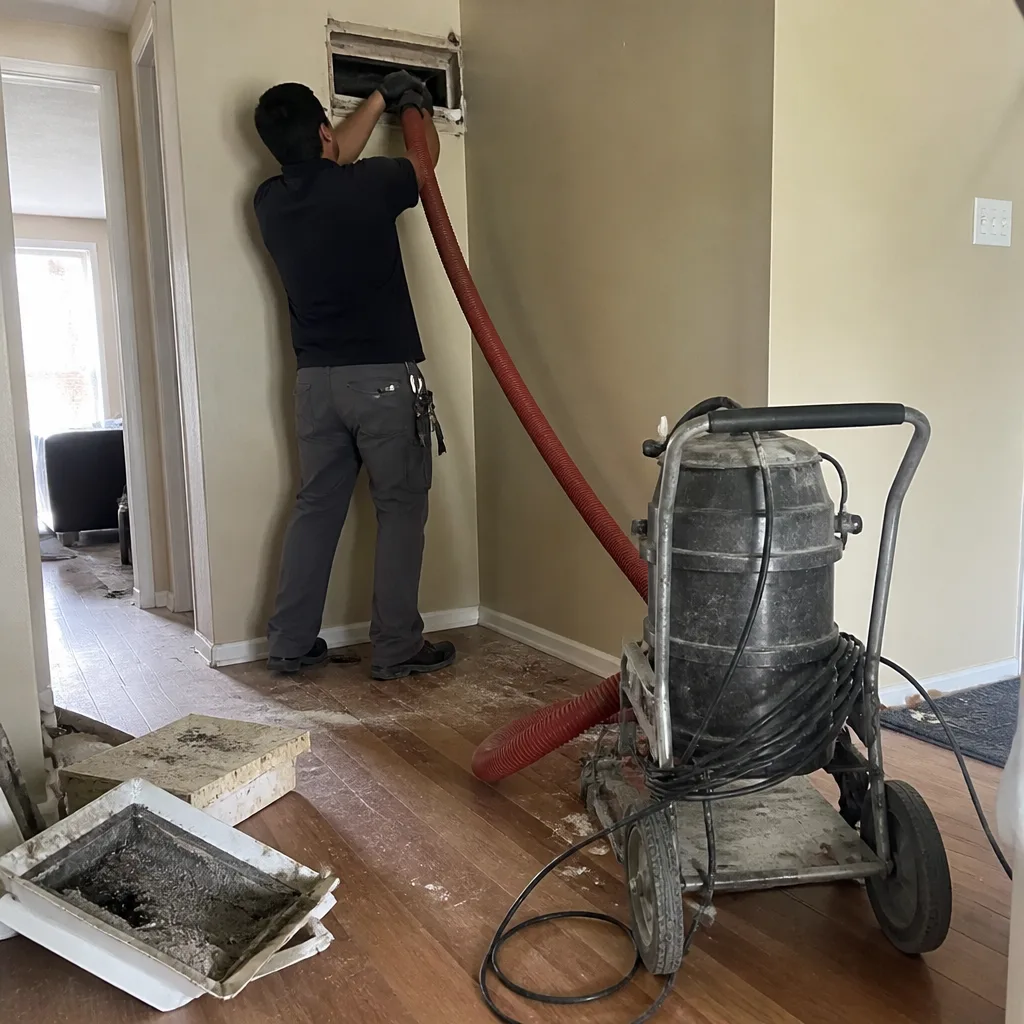 Before
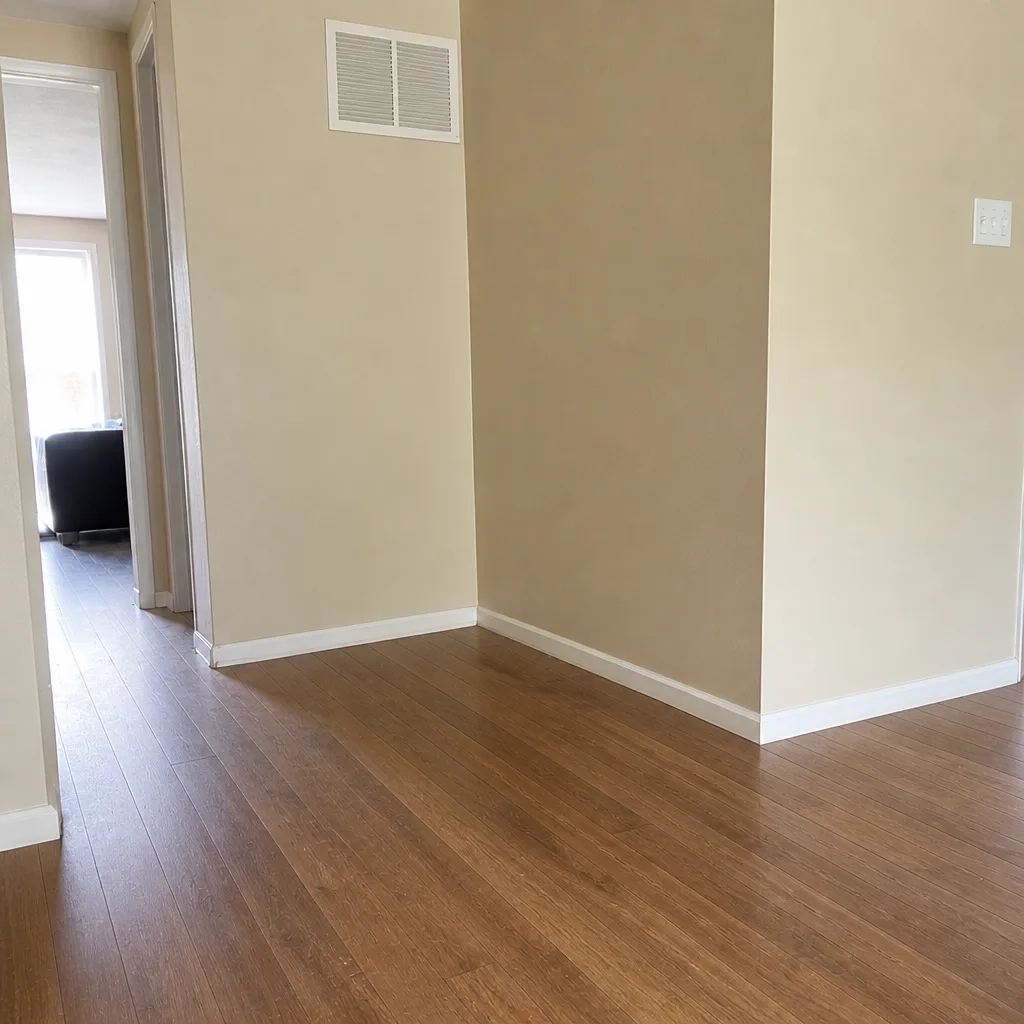 After