
Last updated November 25, 2026
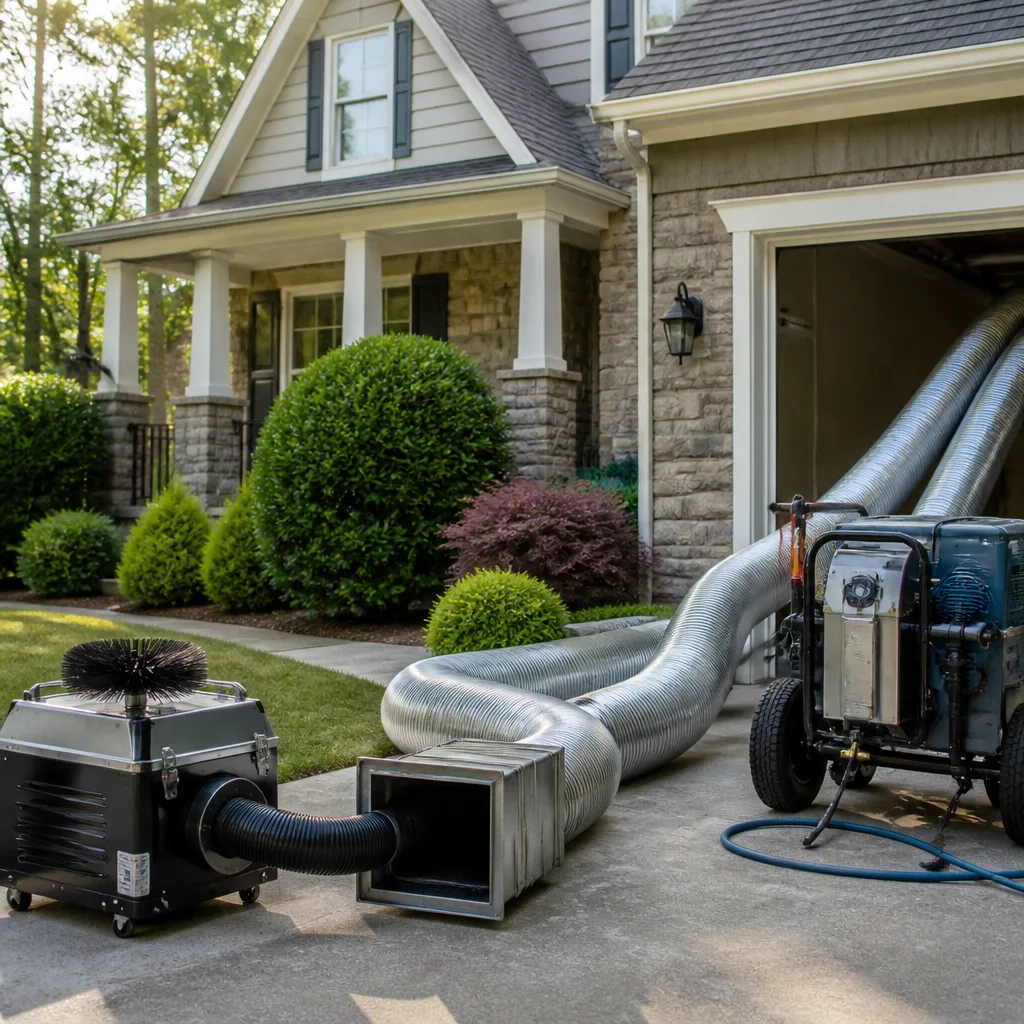 Whole-home duct cleaning
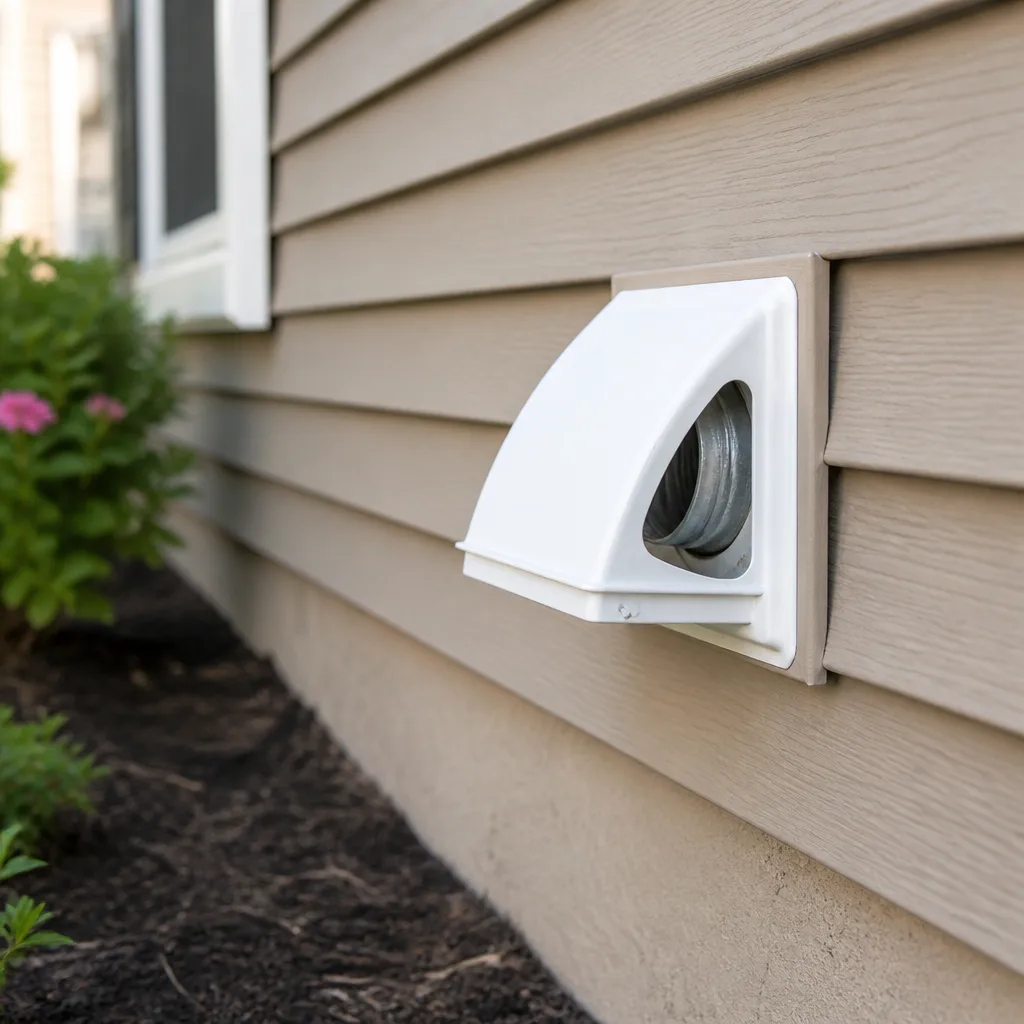 Dryer vent cleaning
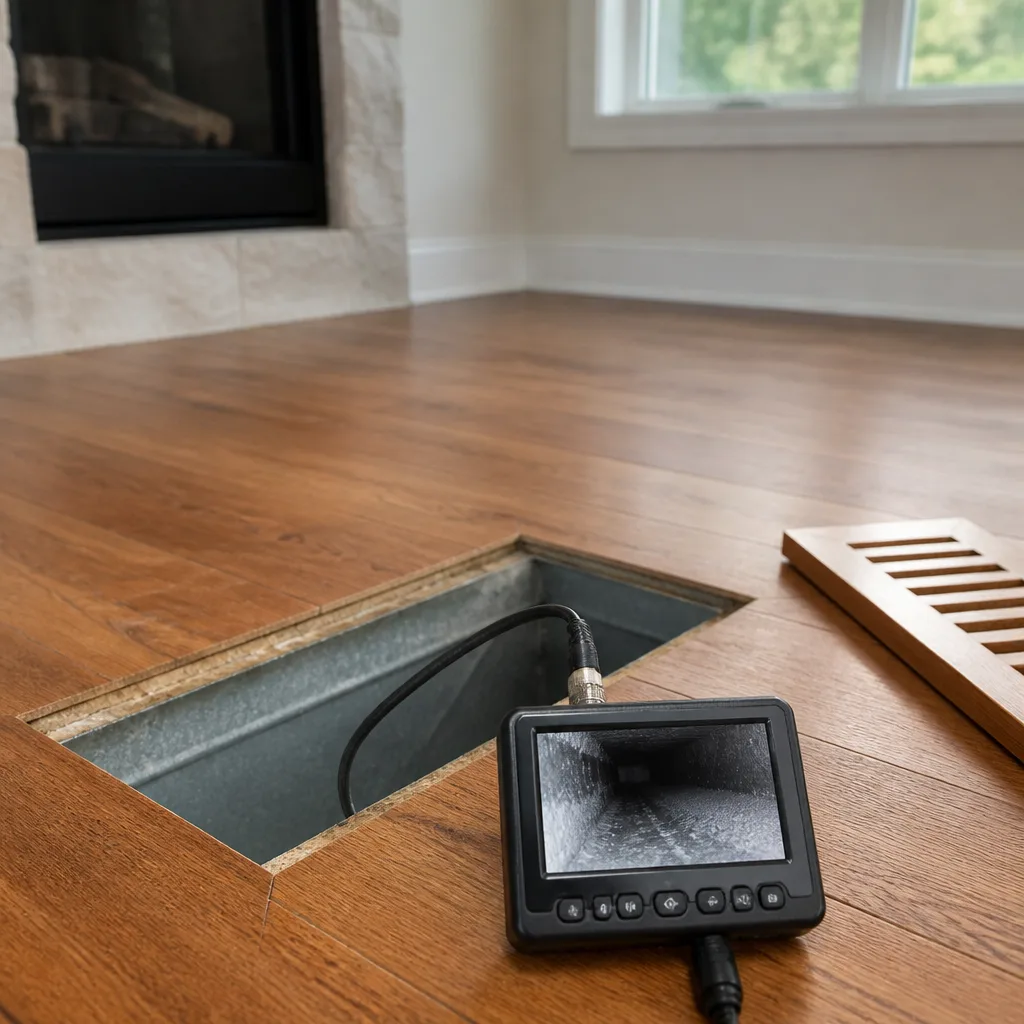 Camera inspection
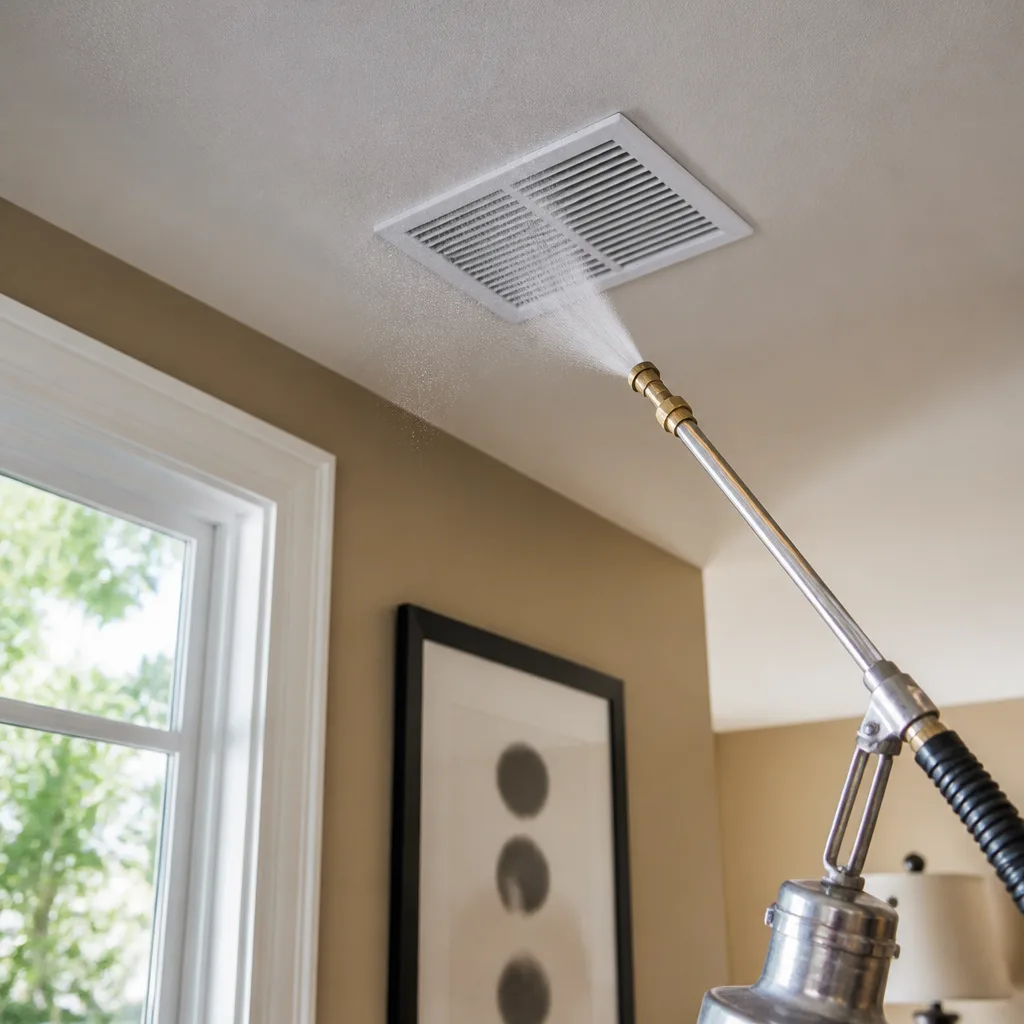 Sanitizing & deodorizing
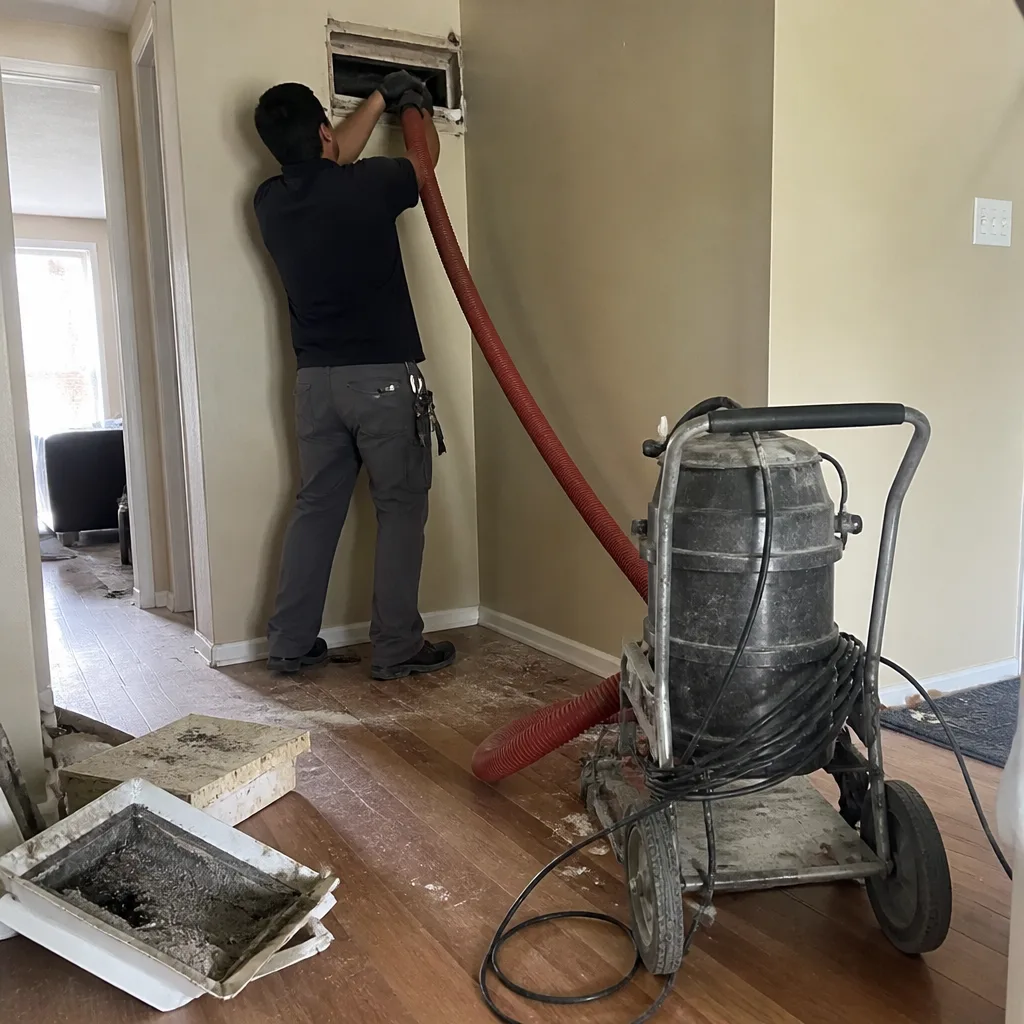
Whole-system duct and dryer vent check with before-and-after photos - you see exactly what came out of your vents
That "$99 whole-house special" is a bait ad - the real number appears once they are in your hallway, or the "clean" is a shop-vac at the register. We photograph the inside of your ducts before and after instead.
Seasonal Air Duct Cleaning Care for Alief: Year-Round Homeowner’s Guide
Most seasonal duct care advice was written for a place with four equal seasons. Alief doesn’t have those. We have an eight-month cooling load, a short shoulder period in late fall, a mild winter that barely tests the heater, and a spring allergen surge that arrives weeks before most homeowners think to change a filter. Treating this climate like a generic quarterly checklist is how ducts end up fouled by the time the first hot April week hits. This guide lays out what actually matters in Alief, month by month and season by season, from pre-summer prep through the winter repair window.
Quick Answer
Seasonal air duct cleaning in Alief works best on a four-part rhythm: a deep clean and inspection in late March to mid-April before full cooling load begins, a mid-summer check on condensate and filter condition, a fall transition that clears drain pans before the first heating calls, and a winter window for duct sealing and repair while the system is quiet. Spring pollen and long cooling runs do most of the damage here, so the pre-summer clean is the highest-leverage job of the year.
Styles & brands we work with
- Whole-home duct cleaning
- Dryer vent cleaning
- Camera inspection
- Sanitizing & deodorizing
Table of Contents
- Why Alief’s Climate Breaks the Standard Seasonal Calendar
- Pre-Summer Prep: The Late March to Mid-April Window
- What Happens Inside Flex Duct at Alief Attic Peaks
- Mid-Summer: Filter Load, Condensate, and Cooling Performance
- Fall Transition: Drain Pans and Moisture Checks
- Winter: Alief’s Best Window for Duct Repair and Sealing
- Spring Allergen Season and Duct Contamination
- A Year-Round Care Schedule You Can Actually Keep
Why Alief’s Climate Breaks the Standard Seasonal Calendar
The generic advice you’ll find online says to clean ducts once a year, usually in spring or fall, and to change filters every three months. That schedule assumes the system rests for long stretches. In Alief, it doesn’t. The air conditioner here runs hard from roughly April through October, and in a lot of homes it keeps cycling into November. That’s eight months of continuous airflow through the same ductwork, pulling in whatever the return side can grab: pollen, dust, pet hair, cooking residue, and the fine particulate that comes off older insulation.
Two things follow from that. First, the duct interior accumulates faster here than the once-a-year advice assumes. Second, the system never really gets a long rest, which means the moisture that builds up in a cooling system has more time to sit. A coil and drain pan that stay wet for months in a warm attic is a different environment than one that dries out for half the year.
What Alief actually gets is closer to three seasons, not four:
- A long cooling season (roughly April through October) – peak airflow, peak filter load, peak condensate.
- A short shoulder period (late October into December) – the system runs less, which is exactly when you can inspect and fix things without fighting the thermostat.
- A mild winter and early spring (January through March) – low HVAC demand, then a sudden pollen surge that hits before most homeowners have done anything about their filters.
Building a care plan around these three phases instead of four equal quarters is the single most useful shift an Alief homeowner can make. It’s also the reason a spring-only cleaning schedule leaves the ducts dirty through the worst of the cooling season. Clean ducts start to finish means cleaning at the right time, not just once a year on a calendar reminder.
Pre-Summer Prep: The Late March to Mid-April Window
Late March to mid-April is the highest-leverage cleaning window on the Alief calendar. Here’s why. Once the first hot week arrives and the system shifts into full cooling load, it runs for hours at a time, moving a large volume of air through ductwork that’s been sitting since fall. If that ductwork has accumulated dust, pollen, and any microbial growth over the cooler months, the first weeks of heavy cooling are when all of it gets pushed into the living space. Clean before that happens and you spend the whole summer breathing easier. Clean in June and you’ve already run the contaminated system for two months.
What a proper pre-summer job involves, and what to ask for:
- Full inspection first. Look at the return side, the supply runs, the plenum, and the coil. Photograph what’s found before cleaning begins.
- Agitate the duct interior. A rotary-brush system like the Rotobrush line is what actually knocks loose the adhered dust and biofilm that a vacuum alone can’t lift. This is the difference between a real cleaning and a surface pass.
- Capture with HEPA vacuum. Nikro HEPA-rated equipment pulls the dislodged material out and traps it, rather than letting it drift back into the rooms.
- Contain the work area. Abatement Technologies negative-air and containment gear keeps debris out of the living space while the job is running. On a home with kids, pets, or anyone with allergies, this matters as much as the cleaning itself.
- Sanitize where needed. If there’s visible microbial growth or odor, an air quality and sanitizing treatment follows the cleaning, not the other way around.
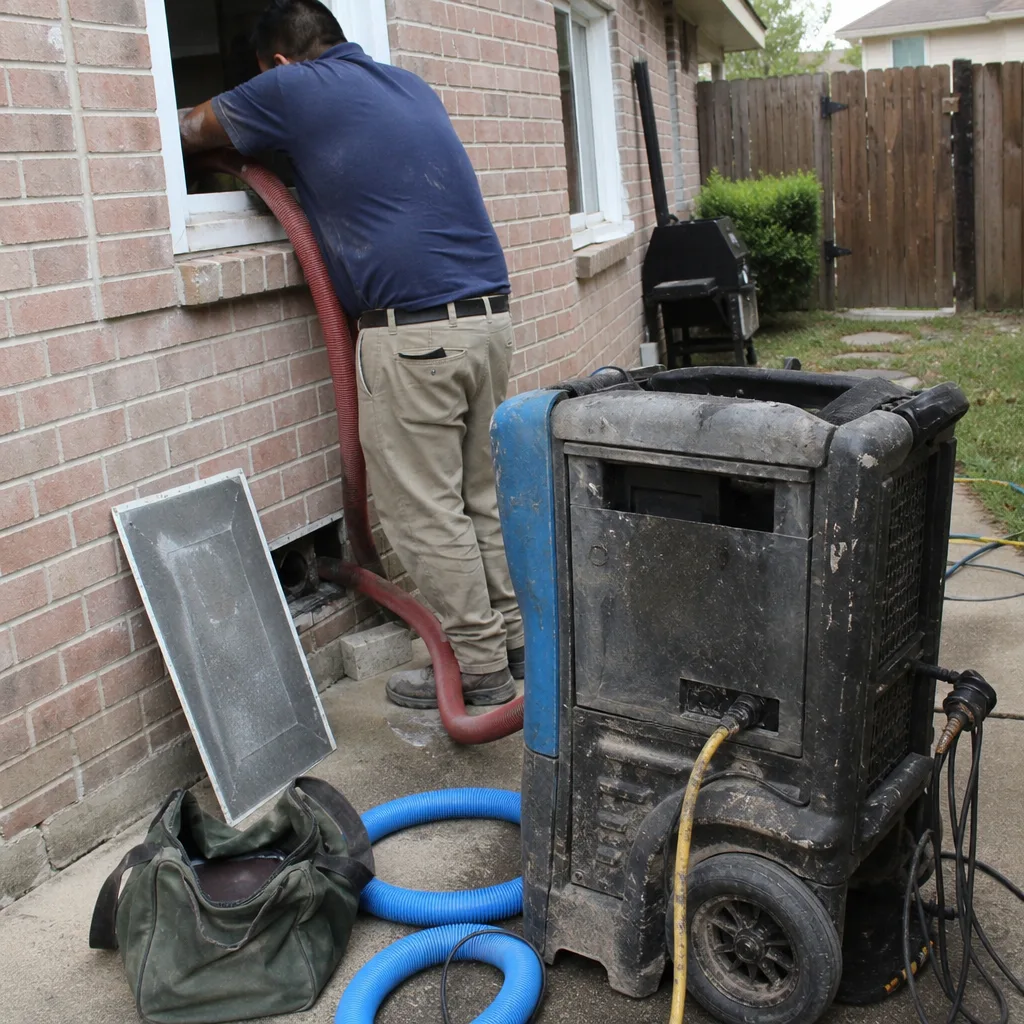
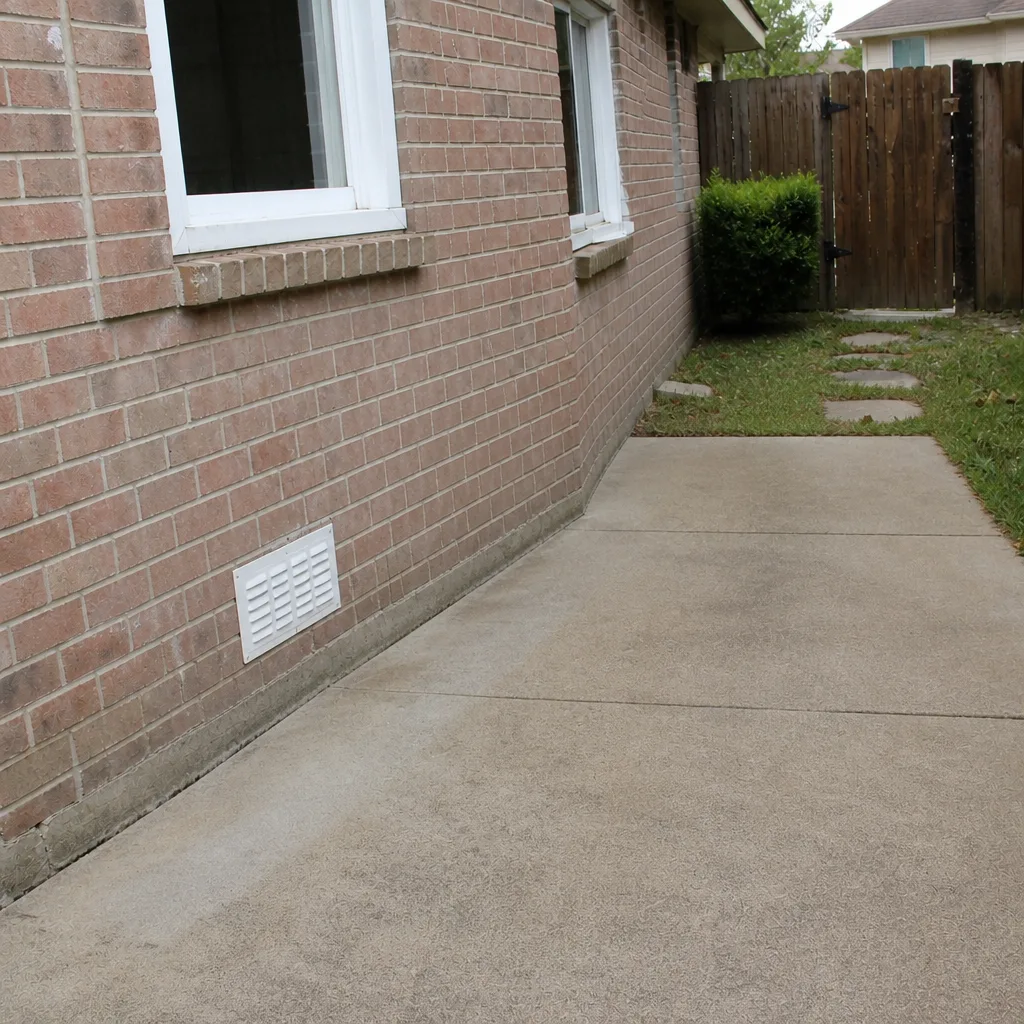
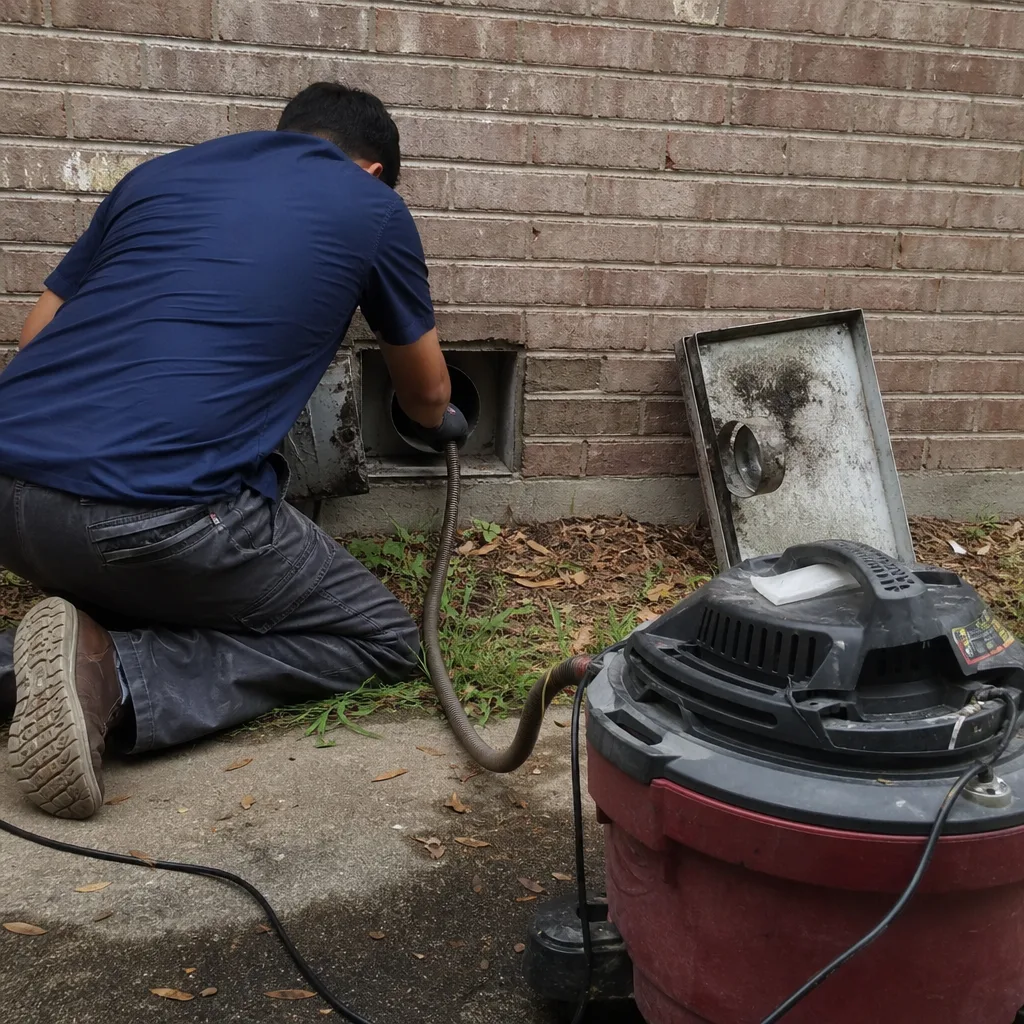
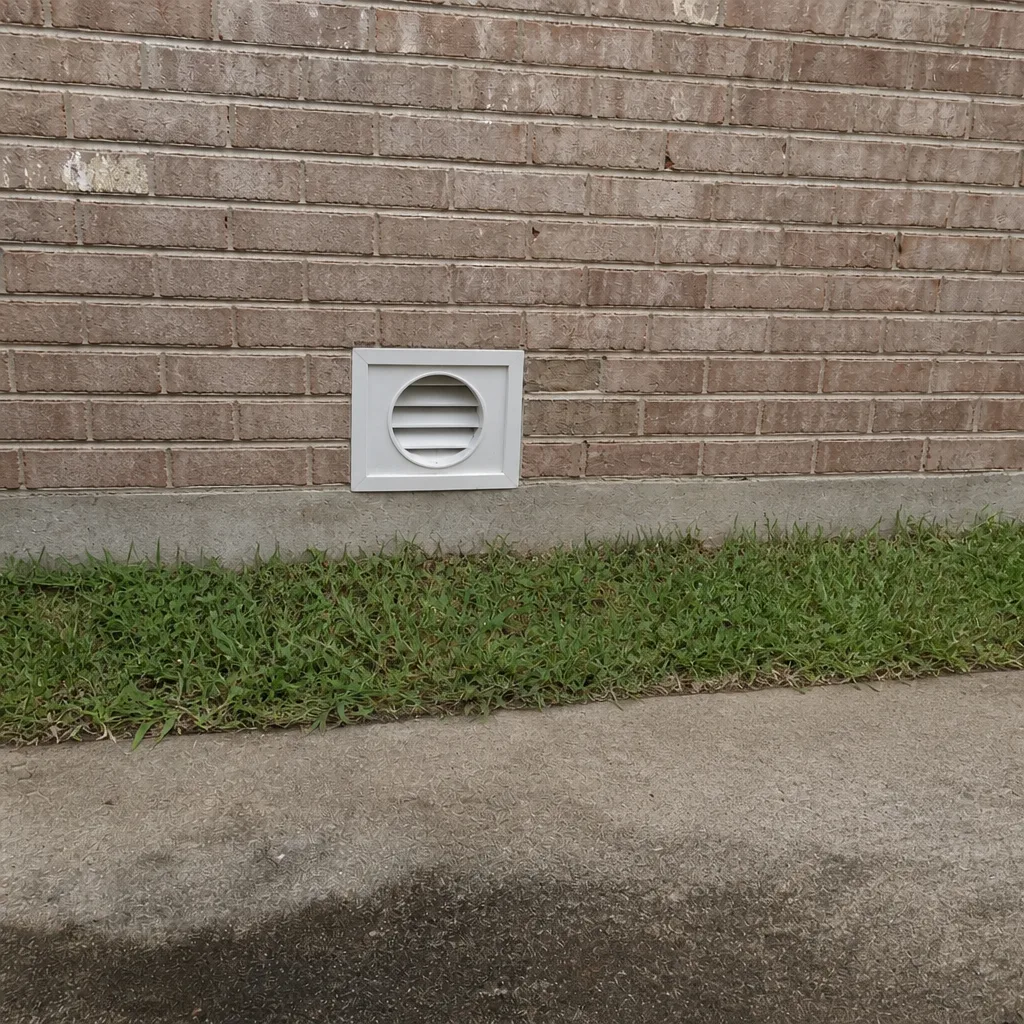
- Verify. Before-and-after photos of the actual ducts, so you can see what changed.
If your system has flex duct runs, pay extra attention to the return trunk and any runs that pass through the attic. Those are the parts that take the most punishment here. This is also the right moment to book a full air duct cleaning before the calendar fills up with summer calls.
What Happens Inside Flex Duct at Alief Attic Peaks
Attic temperatures in Alief hit extreme peaks in the summer, and flex duct sitting up there is exposed to every degree of it. A flex run that’s sagging, compressed, or poorly supported traps heat, and heat cycles do two things to the inside of that duct. First, they bake dust onto the walls, making it adhere rather than stay loose. Second, they create the warm, humid conditions where condensation can form on a cold duct surface, and that moisture is what feeds microbial growth.
This is why the interior of an Alief attic duct run often looks worse than the interior of a run in the conditioned space. The attic run gets the temperature swing, the humidity, and the condensation, all in the same tube. You don’t need a laboratory to see the result. What you’ll often see on a pre-summer inspection is:
- Dust adhered to the duct wall instead of loose, which means a plain vacuum pass won’t remove it.
- Dark staining or spotting on the inner liner where moisture has repeatedly condensed.
- Sagging or compressed sections where the duct has lost its shape and airflow has dropped.
- Loose joints or disconnected sections letting attic air into the supply stream.
Two practical takeaways. Proper support and routing of flex runs matters as much as cleaning them – a duct that’s crushed or sagging will foul again quickly. And if the inside of the run shows moisture staining, the right fix is a combination of cleaning and sanitizing, plus checking the duct for leaks and insulation damage. That’s where a full-cycle approach (clean, sanitize, then air duct cleaning Alief repair and sealing where needed) does more than a cleaning alone.
Mid-Summer: Filter Load, Condensate, and Cooling Performance
By July and August, the Alief cooling system is running its hardest. This is the season where small problems compound. The filter loads up faster than the three-month advice suggests, the condensate drain has been carrying water for months, and any duct leakage is quietly costing you money every hour the system runs.
What to check in the middle of the cooling season:
- Filter condition. Pull it and look at it. In a house with pets or a lot of foot traffic, the filter can be loaded in weeks, not months. A clogged filter starves the system and pushes more load onto the coil.
- Condensate drain flow. Make sure the drain line runs freely and the drain pan isn’t holding standing water. A slow drain in a hot attic is a moisture problem waiting to grow.
- Coil condition. A dirty coil means the system has to run longer to cool the same space, which means more airflow through the ducts and more filter load. It’s a loop that feeds itself.
- Duct leakage. Feel around accessible joints for escaping air. Leaks in attic runs pull hot, humid, or unfiltered air into the supply stream.
If you’re serious about what you’re breathing through the summer, this is also the season where a whole-home filtration add-on earns its keep. Brands like Honeywell and Aprilaire offer filtration and humidity solutions that integrate with the system you already have, which is more effective than trying to catch everything in a single return filter. We can recommend and service those as part of the same visit, so the filtration question doesn’t get put off to another contractor and another appointment. For a deeper look at how coil, blower, and duct condition interact with cooling performance, see our page on HVAC cleaning.
Fall Transition: Drain Pans and Moisture Checks
Late October into early December is Alief’s shoulder period – the system runs less, sometimes barely at all, and that makes it the right time to catch what the long cooling season left behind. This is the moisture inspection window.
What to do as the cooling load drops off:
- Clean and dry the drain pan. All summer it’s been wet. Check for standing water, algae, or slime in the pan and the drain line, and clear anything that’s building up.
- Check the coil and plenum for moisture damage. Look for staining, soft insulation, or rust at the cabinet. These are signs moisture has been sitting somewhere it shouldn’t.
- Inspect the return side. The return is where the dirtiest air enters the system, and fall is a good moment to check whether it needs attention before it sits through the cooler months.
- Test the heater. Before the first genuinely cool night, run the heating side for a few minutes to confirm it comes on and the vents deliver warm air.
- Change the filter. A fresh filter going into the low-demand season means less load on the system and fewer contaminants sitting in the ducts over winter.
If your fall inspection turns up moisture staining or microbial growth, don’t just wipe it down. Cleaning plus a sanitizing treatment is the combination that addresses the source. That’s the air quality and sanitizing side of our work, and it’s worth doing before the growth has a whole quiet winter to establish itself. This is also the point in the year where a dryer vent cleaning makes sense: the lint that builds up over a busy summer of laundry is a fire-safety item, and fall is the natural time to clear it.
Winter: Alief’s Best Window for Duct Repair and Sealing
Winter is Alief’s lowest HVAC demand window, and that makes it the best time of year for inspection, repair, and sealing work. The system barely runs, the attic is at its most workable, and a repair done now won’t interfere with comfort. This is the season to fix the things you noticed all summer and put off.
What’s worth doing in the winter window:
- Seal duct joints and connections. Leaks in the supply and return runs waste conditioned air and pull in unfiltered attic air. Sealing is a low-cost, high-return fix.
- Repair disconnected or damaged flex runs. A sagging or disconnected run in the attic is doing nothing useful for the rooms it’s supposed to feed.
- Re-support and reroute where needed. A flex run that’s compressed against a truss or crushed at a bend will foul faster and move less air. Winter is the time to fix the routing.
- Inspect the full duct ecosystem. This is the moment to look at every run, not just the ones that showed an obvious problem. Sealing work done now pays off all summer.
Winter repairs here don’t have the urgency of a mid-summer failure, and that’s the point. Fixing a duct leak in January means you’re not chasing it in August when the system can’t keep up. We repair and seal, not just clean, which is the difference between a one-time clean and ductwork that actually holds its condition. If your winter inspection turns up damaged runs, this is the season to schedule the repair before the cooling load returns in spring.
Spring Allergen Season and Duct Contamination
Alief’s spring pollen surge arrives before most homeowners have done anything about their filters. Cedar, oak, and Bermuda grass pollen all come on in the early spring, and the timing matters. If your ducts still hold last year’s dust load when the pollen peaks, the system has a reservoir to hold it and a return path to put it back into your air.
Here’s how it plays out. Pollen enters the home through open doors, on clothing, through a dusty return, and through any unfiltered leak in the system. A clean, sealed duct system with well-supported runs and a fresh filter captures most of it. A dirty, leaky system just stores it. We’ve seen the difference a pre-summer clean makes for allergy sufferers in Alief, and the pattern is consistent: the homes that clean before the pollen surge have a much better spring than the ones that clean after the fact.
The spring allergen interaction to watch for:
- Pollen gets stored in duct dust. The finer and dirtier the duct interior, the more pollen the dust catches and holds.
- Leaky returns pull in unfiltered air. A compromised return is a straight path for pollen that never touched the filter.
- Microbial growth thrives on the moisture that comes with the season. Warm, humid spring air plus a wet coil and drain is exactly the environment microbial growth wants.
The practical answer is to clean before the surge, seal the leaks that let pollen bypass the filter, and get the filter on a schedule that actually fits your household. If you’re dealing with allergies, the full sequence – clean, sanitize, seal, then filter – is what changes the air in the room. Guardsman-grade surface and sanitizing protocols applied during an air-quality treatment are a real part of that sequence, not an afterthought.
A Year-Round Care Schedule You Can Actually Keep
A schedule you can keep is worth more than a perfect one you can’t. Here’s the Alief year in a form that fits a normal household:
- Late March to mid-April: full duct cleaning and inspection, sanitizing if there’s growth or odor, before the first 95-degree week arrives.
- May through September: check the filter every month in peak summer, keep the condensate drain flowing, watch for cooling performance drops that point to coil or duct issues.
- October into December: clean the drain pan, check for moisture damage, test the heating side, change the filter on the way into the low-demand season.
- January through February: duct sealing and repair window, plus a full inspection of every run while the system is quiet.
- February into March: fresh filter, confirm the return side is tight, and get on the schedule for the pre-summer clean before the calendar fills.
What you control between professional visits matters too. A fresh filter at the right intervals, a clean return grille, and prompt attention to any moisture or odor are the habits that keep a duct system in condition between cleanings. Professional-grade equipment, every job is the part that only a trained technician brings; the rest is routine upkeep any homeowner can manage.
Common Mistakes to Avoid
- Cleaning only in summer. By the time the first hot week hits, the ducts have already delivered whatever built up over winter. Clean in late March to mid-April, before the cooling load begins.
- Trusting a plain vacuum pass. Loose dust comes up easily; the adhered film that builds up over eight months of cooling needs a rotary-brush system to break it free. A shop vac isn’t the same job.
- Ignoring the drain pan in fall. Standing water in a warm attic is what feeds microbial growth through the quieter months. Clear it, dry it, and inspect the coil before winter.
- Skipping the repair and sealing step. Cleaning a duct system with leaks just means it fouls again faster. Seal the joints and fix the sagging runs, or the next clean is on the same schedule.
- Waiting until spring pollen is already in the air. The Alief pollen surge hits before most homeowners change their filters. That’s a window you can’t miss if you want the clean to do its work.
- Treating filter changes as a quarterly calendar item. In a busy Alief household in peak summer, a filter can load in weeks. Look at it, don’t just count the months.
- Assuming an annual clean covers everything. The dryer vent and the HVAC cabinet are part of the same system of concerns. A duct-only approach misses both.
See the difference
 Before
 After
 Before
 After
 Before
 After
When to Call a Professional
Call a professional when you see moisture staining on duct or cabinet surfaces, smell a musty or damp odor when the system runs, or notice cooling performance dropping in the middle of summer. Call if you’ve had a renovation, a pest issue, or a water event in the home. Call if your ductwork is sagging, disconnected, or you can feel air escaping at accessible joints. And call before the pollen surge if anyone in the house has allergy or respiratory concerns. Air Duct Cleaning Alief offers free estimates in Alief – call (877) 492-3978. We answer 24/7, with fast dispatch from 7am to 7pm, Sunday through Friday. Our technicians have up to 15 years of experience, and the local pro is licensed and insured as their state requires.
Frequently Asked Questions
Once a year is the right baseline in Alief, but the timing matters more than the frequency: the pre-summer window in late March to mid-April is the highest-value clean of the year because it removes what built up over the cooler months before the cooling system pushes it into the living space. Homes with pets, allergies, recent renovations, or older ductwork often benefit from a mid-summer filter check and a fall moisture inspection on top of that annual clean. Call (877) 492-3978 for an exact quote – estimates are free.
Spring is better in Alief, and specifically late March to mid-April. Fall is the better window for moisture inspection, drain pan cleaning, and duct sealing work, but the main clean should happen before the cooling load begins so the system runs clean all summer. Cleaning in fall means you’ve run a contaminated system through the hottest months. Call (877) 492-3978 to get on the pre-summer schedule.
The heat cycles cause dust to bake onto the duct wall rather than stay loose, and repeated condensation on the duct surface creates the moisture that feeds microbial growth. That’s why attic runs often show more staining and adhered dust than runs in the conditioned space, and why a rotary-brush system matters for those runs. If your attic duct looks stained or sagging, that’s worth an inspection. Call (877) 492-3978 – estimates are free.
Yes, in Alief specifically. Cedar, oak, and Bermuda grass pollen arrive early, and a dirty, leaky duct system catches and stores that pollen, then recirculates it whenever the system runs. Cleaning before the surge and sealing the leaks that let pollen bypass the filter is the combination that actually helps. Call (877) 492-3978 to schedule before the season peaks.
Cheap quotes usually mean a surface vacuum pass with consumer-grade equipment, no rotary-brush agitation, no HEPA capture, and no containment. That leaves the adhered dust and biofilm in the duct and can redistribute debris through the home during the job. A professional job uses contractor-grade equipment – Rotobrush and Nikro systems, Abatement Technologies containment – and includes before-and-after photos so you can see what was actually done. One flat price per system, agreed before work starts. Call (877) 492-3978 for a real quote.
Some of it, yes. Change the filter on a schedule that fits your household, keep the return grille clean, check the condensate drain for standing water, and watch for moisture or odor. What you shouldn’t do yourself is try to clean the inside of the ductwork with consumer equipment, and you should never open the HVAC cabinet or coil area without training. Leave the rotary-brush cleaning, containment, sanitizing, and sealing to a professional. We answer 24/7 if you have questions about what’s normal and what needs a visit.
The Bottom Line
Alief’s duct care doesn’t fit a four-season calendar. It fits a long cooling season, a short shoulder period, and a mild winter with an early pollen surge. Clean in late March to mid-April before the cooling load begins. Watch the filter, coil, and condensate drain through the summer. Clear and inspect in the fall. Use the winter quiet for sealing and repair. And if you’re serious about what you’re breathing, do the pre-summer clean before the first hot week, not after. Professional-grade equipment on every job, a full cycle from cleaning through sanitizing to sealing, and before-and-after photos so you know the work happened. Call (877) 492-3978 for a free estimate. We answer 24/7, with fast dispatch from 7am to 7pm, Sunday through Friday.
Written by the team at Air Duct Cleaning Alief.